

TL;DR:
- Proper home ventilation removes indoor pollutants and controls moisture to ensure safe, healthy living conditions. Sealing a home without adding controlled airflow traps pollutants and increases mold risk, making mechanical systems like HRVs and ERVs essential. Regular maintenance and using CO2 monitors help homeowners ensure their ventilation systems work effectively to protect indoor air quality.
Ventilation is defined as the continuous exchange of stale indoor air with fresh outdoor air to maintain healthy, comfortable living conditions. The role of ventilation in homes goes far beyond cracking a window. It controls humidity, removes pollutants like PM2.5 and volatile organic compounds (VOCs), and directly affects how safe your home is to breathe in. Standards like ASHRAE 62.2 set minimum ventilation rates for residential buildings, and building science research confirms that poor airflow causes measurable harm to both health and home structure. Whether your house is decades old or newly built, ventilation is not optional.
How does ventilation affect indoor air quality and health?
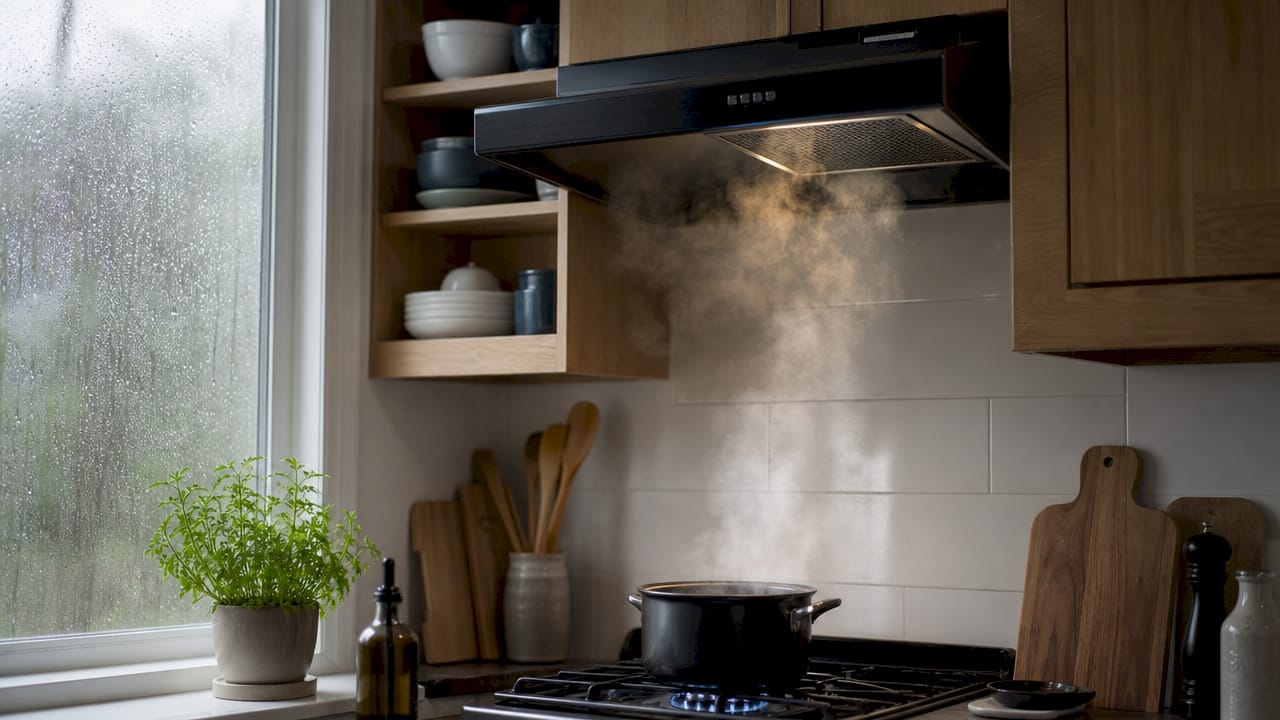
Indoor air is consistently more polluted than outdoor air. Cooking, cleaning, breathing, and off-gassing from furniture all release contaminants that build up fast in enclosed spaces. Ventilation is the primary defense against that buildup.
The pollutants most affected by ventilation include:
- PM2.5 (fine particles from cooking, candles, and dust)
- VOCs (from paints, adhesives, and cleaning products)
- CO2 (from human respiration, which rises quickly in occupied rooms)
- Moisture (from showers, cooking, and breathing, which leads to mold)
Opening windows during cooking reduces indoor PM2.5 exposure by up to 58.4%. That is a significant reduction from a zero-cost action. Closed windows during the same activity increase PM2.5 levels by 28.9% compared to a fully open scenario.
Mechanical ventilation produces measurable health benefits beyond air quality numbers. Decentralized mechanical ventilation reduces upper respiratory tract infection symptoms by 7.8% compared to manual window airing in winter. That finding comes from classroom research, but the underlying biology applies directly to homes where occupants spend far more time.
A room can feel thermally comfortable and still be harmful. Inadequate ventilation creates physiological stress even when temperature and humidity feel acceptable. Homeowners who rely on comfort alone to judge air quality are missing a critical signal.
Moisture control is another major function of ventilation. Without adequate airflow, condensation forms on walls and windows, creating conditions for mold growth. Mold remediation is expensive and disruptive. Consistent ventilation prevents the problem before it starts.
What types of home ventilation systems are available?
Ventilation systems fall into three categories: natural, mechanical, and balanced. Each works differently and suits different home types and climates.
| Ventilation type | How it works | Energy impact | Best for |
|---|---|---|---|
| Natural | Windows, doors, trickle vents | None | Mild climates, older homes |
| Exhaust only | Fans remove stale air; fresh air enters through gaps | Low | Bathrooms, kitchens |
| Supply only | Fans push fresh air in; stale air exits through gaps | Low to moderate | Dry climates |
| Balanced (HRV/ERV) | Equal fresh air in and stale air out with heat/moisture recovery | Moderate, offset by recovery | Airtight, energy-efficient homes |
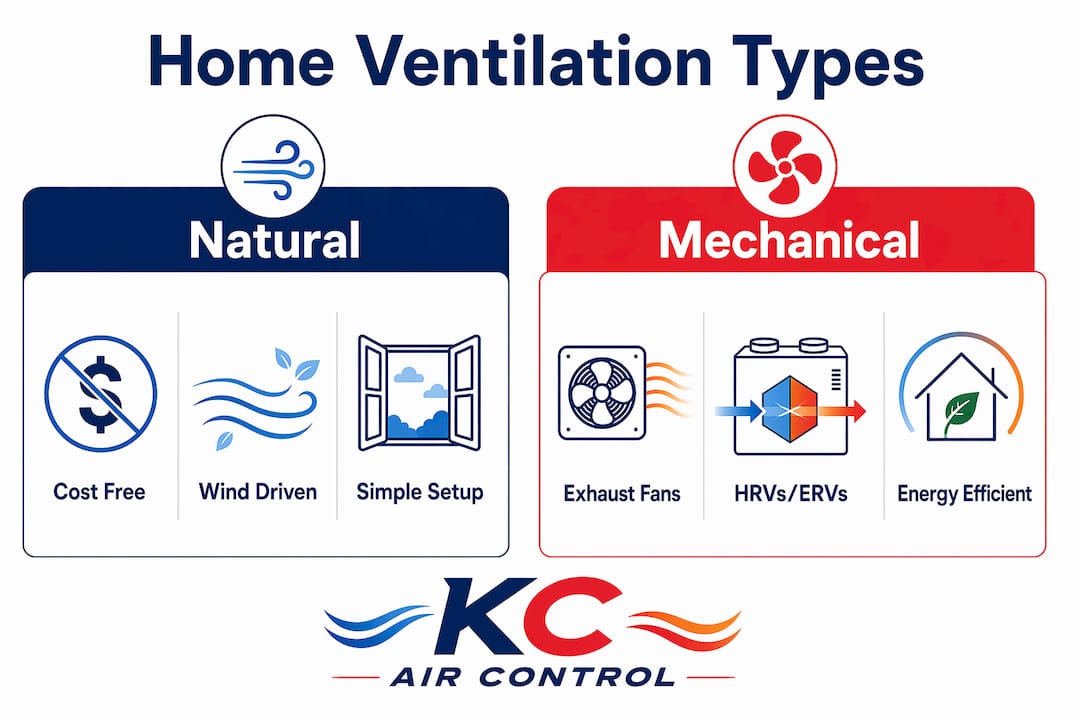
Natural ventilation relies on pressure differences and wind to move air through openings. It costs nothing to run but provides no control over airflow rate or direction. On calm days or in extreme temperatures, it fails to deliver adequate fresh air.
Exhaust fans in bathrooms and kitchens handle spot ventilation. They remove moisture and odors at the source, which is effective but limited. They do not address whole-house air quality.
Balanced ventilation systems like HRVs and ERVs provide fresh, filtered air while recovering heat and moisture. An HRV (heat recovery ventilator) transfers heat from outgoing stale air to incoming fresh air, reducing heating costs. An ERV (energy recovery ventilator) also transfers moisture, making it better suited for humid climates. Both systems maintain comfort without wasting the energy you have already paid to condition the air.
Pro Tip: If your home was built or renovated after 2010, check whether an HRV or ERV was installed. Many energy-efficient builds include one but homeowners never learn how to operate or maintain it.
For homeowners who want to understand how different ventilation systems contribute to a healthy indoor environment, the type of system matters as much as whether one exists at all.
Why do airtight homes need mechanical ventilation?
Modern energy codes push homeowners to seal gaps, add insulation, and reduce air leakage. That is good for energy bills. It creates a serious ventilation problem.
Tightening a home’s envelope without adding controlled ventilation traps pollutants and moisture, degrades air quality, and causes mold growth. Building science professionals summarize this with one principle: “build tight, ventilate right.” Sealing without ventilating is the worst possible outcome.
Key challenges in airtight homes include:
- Natural air infiltration drops to near zero, so pollutants have no exit path
- Moisture from cooking and bathing accumulates faster
- CO2 rises more quickly in occupied rooms
- Radon and other soil gases can concentrate without dilution
Building regulations require that energy efficiency work, including insulation and gap sealing, must not worsen existing ventilation. That means any sealing project should include a ventilation assessment. Homeowners who skip that step often discover mold or air quality problems within a few years.
HRVs and ERVs solve the airtight home problem directly. They provide controlled, continuous fresh air exchange without the energy penalty of simply opening a window in winter. The ventilation and energy tradeoff is real, and HRVs and ERVs are the most effective way to manage it.
Pro Tip: Before sealing your attic or adding spray foam insulation, schedule a blower door test. It measures your home’s current air leakage rate and tells you whether mechanical ventilation is needed before you seal.
Pairing energy upgrades with proper ventilation planning also opens financing options. Kcaircontrol’s 2026 HVAC energy efficiency guide covers how to fund these improvements without paying everything upfront.
How do you maintain home ventilation systems for best performance?
Ventilation systems only work if they are maintained. A clogged filter or blocked vent delivers no benefit and can actively harm air quality by restricting airflow.
Follow these steps to keep your ventilation performing well:
- Replace mechanical ventilation filters annually. Dirty filters reduce airflow and allow particles to bypass filtration. A proper HVAC filter replacement schedule keeps the system effective and protects equipment.
- Clean extractor fans every six months. Grease and dust build up on fan blades and reduce extraction capacity significantly.
- Keep trickle vents open year-round. Blocked trickle vents increase the risk of mold and condensation, especially in winter when windows stay closed.
- Monitor CO2 levels with an indoor monitor. CO2 concentration is the most practical proxy for ventilation adequacy. Levels above 1,000 ppm in an occupied room signal insufficient fresh air.
- Inspect HRV/ERV cores twice a year. Remove and rinse the heat exchange core according to the manufacturer’s instructions. A dirty core loses efficiency and can harbor mold.
Signs of poor ventilation include persistent condensation on windows, musty odors, frequent headaches or fatigue in occupants, and visible mold near vents or in corners. Any of these signals warrants immediate attention. Seasonal HVAC maintenance that includes ventilation checks prevents these problems from developing into costly repairs.
What ventilation improvements can homeowners make right now?
You do not need a full renovation to improve airflow. Several practical steps deliver real results with minimal cost or disruption.
- Open windows on opposite sides of the house to create cross-ventilation. Even 10 minutes of cross-ventilation after cooking or showering clears pollutants effectively.
- Run kitchen and bathroom fans during and after use. Run the bathroom fan for at least 20 minutes after a shower to fully remove moisture.
- Upgrade exhaust fans to higher-capacity models. Many builder-grade fans are undersized. A fan rated for your room’s square footage removes air faster and more quietly.
- Add a small whole-house HRV or ERV unit. Decentralized units can be installed in a single room or zone without ductwork, making them accessible for DIY homeowners.
- Integrate ventilation into your next HVAC upgrade. When replacing a furnace or air handler, ask about adding an HRV or ERV to the system. The installation cost is lower when done alongside other HVAC work.
Understanding how HVAC systems improve indoor air quality helps you make better decisions when evaluating upgrades. Ventilation and HVAC are not separate systems. They work together to deliver comfortable, healthy air throughout your home.
When symptoms persist despite basic improvements, or when you are planning a major sealing or renovation project, consult a professional. A qualified HVAC technician can perform airflow measurements, identify gaps in your current system, and recommend the right solution for your home’s size and layout.
Key takeaways
Proper ventilation is the single most effective action a homeowner can take to protect indoor air quality, prevent mold, and maintain comfort in both old and newly built homes.
| Point | Details |
|---|---|
| Ventilation removes pollutants | Opening windows during cooking cuts PM2.5 exposure by up to 58.4%. |
| Airtight homes need mechanical ventilation | Sealing gaps without adding controlled airflow traps pollutants and causes mold. |
| HRVs and ERVs balance fresh air and energy | These systems exchange air while recovering heat, keeping energy costs manageable. |
| CO2 monitors measure ventilation adequacy | Levels above 1,000 ppm in an occupied room signal that fresh air supply is insufficient. |
| Maintenance is non-negotiable | Annual filter changes and clean trickle vents are the minimum for system performance. |
What I’ve learned after years of watching homeowners overlook ventilation
Most homeowners think about ventilation only when something goes wrong. They notice the mold, the condensation, or the persistent stuffiness, and then they call for help. By that point, the damage is already done.
The misconception I see most often is that a tight, well-insulated home is automatically a healthy home. It is not. Sealing a home without planning for ventilation creates an air quality problem that insulation cannot fix. The building science community has said “build tight, ventilate right” for decades. That message still has not reached most homeowners.
The other mistake is treating ventilation as a set-and-forget system. Filters clog. Fans accumulate grease. Trickle vents get painted shut during renovations. None of these failures announce themselves. You have to check.
My honest recommendation: buy a CO2 monitor. Place it in the room where your family spends the most time. Watch what happens when you cook dinner with the windows closed, or when four people are in the living room for two hours. The numbers tell a story that comfort alone never will. Once you see it, you will never think about ventilation the same way again.
— AB
Kcaircontrol keeps your home’s air clean and comfortable
Ventilation and HVAC performance are directly connected. When your ducts are dirty, your filters are clogged, or your system is not moving air efficiently, your home’s air quality suffers regardless of how good your ventilation setup is.

Kcaircontrol has served Kansas City homeowners for over 70 years with HVAC maintenance, duct cleaning, system installations, and indoor air quality solutions. If your home feels stuffy, shows signs of moisture buildup, or your system has not been serviced recently, our team can assess your ventilation and HVAC setup and recommend the right fix. Professional duct cleaning services remove the buildup that blocks airflow and undermines your ventilation system’s effectiveness. Schedule a consultation with Kcaircontrol and get your home’s air working the way it should.
FAQ
What is the role of ventilation in homes?
Ventilation continuously replaces stale indoor air with fresh outdoor air, removing pollutants, controlling moisture, and maintaining healthy CO2 levels. Without it, contaminants from cooking, cleaning, and occupancy accumulate to harmful concentrations.
How does ventilation affect indoor air quality?
Ventilation directly reduces concentrations of PM2.5, VOCs, CO2, and moisture. Opening windows during cooking alone cuts PM2.5 exposure by up to 58.4%, according to published research.
Do airtight homes need mechanical ventilation?
Yes. Sealing a home’s envelope eliminates natural air infiltration, which means pollutants and moisture have no exit path. Mechanical ventilation, ideally an HRV or ERV, is required to maintain safe air quality in airtight homes.
How can I tell if my home has enough ventilation?
A CO2 monitor is the most practical tool. Readings consistently above 1,000 ppm in an occupied room indicate that fresh air supply is insufficient and ventilation needs improvement.
How often should home ventilation systems be maintained?
Replace mechanical ventilation filters at least once a year, clean exhaust fans every six months, and inspect HRV or ERV cores twice a year. Keep trickle vents clear year-round to prevent mold and condensation.