
TL;DR:
- Duct cleaning involves professionally removing dust, mold, and debris from your home’s air duct system and HVAC components. It is recommended only when visible contamination, pest infestations, or significant debris restrict airflow are confirmed, not as routine maintenance. Proper cleaning requires trained technicians, high-quality equipment, and full system cleaning for maximum indoor air quality benefits.
Duct cleaning is defined as the professional removal of dust, debris, mold, and contaminants from your home’s air duct system and HVAC components. The industry term is “air duct cleaning,” and it covers far more than wiping visible vents. Your HVAC system circulates indoor air 5 to 7 times daily, meaning anything inside those ducts moves through your living space repeatedly. The National Air Duct Cleaners Association (NADCA) and the EPA both set standards for what qualifies as a proper cleaning. Understanding those standards protects you from wasted money and poor results.
What is duct cleaning and what does the process involve?
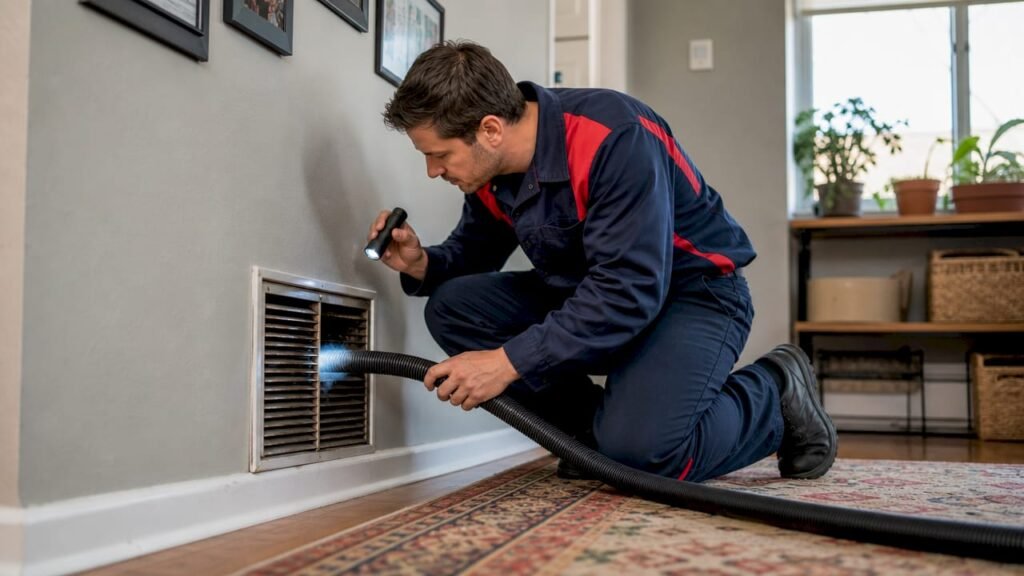
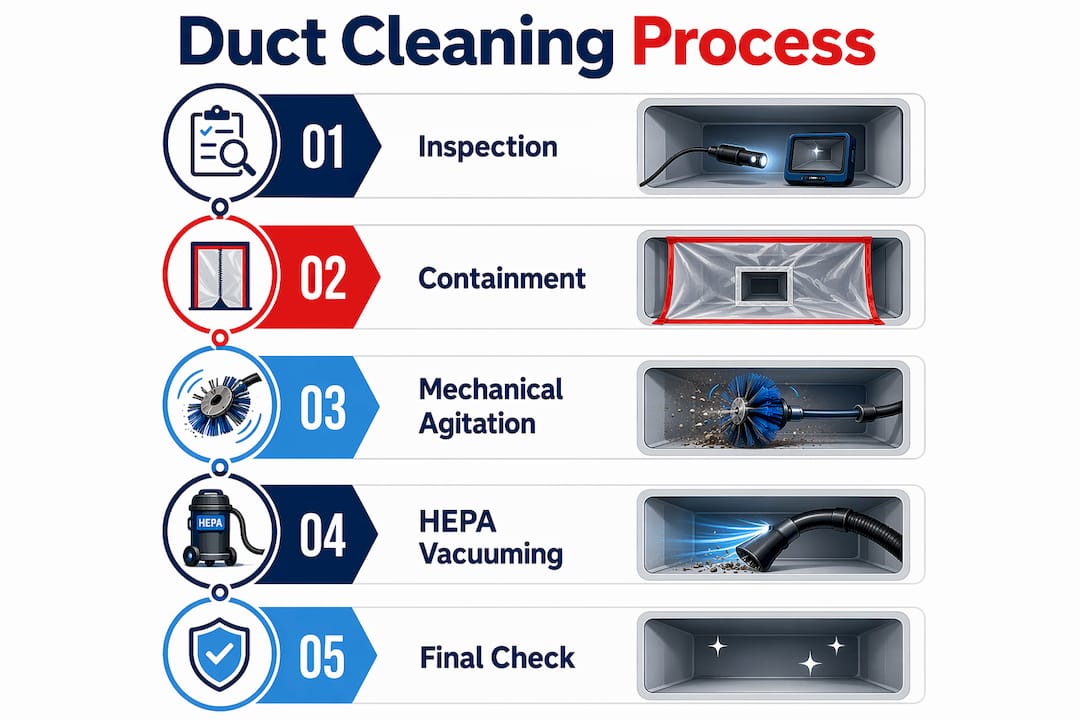
Professional air duct cleaning follows a structured process that goes well beyond vacuuming a few vents. A certified technician inspects the full duct system first, looking for mold growth, pest activity, and debris buildup before any equipment is deployed. That inspection determines the scope of work and documents the system’s condition before cleaning begins.
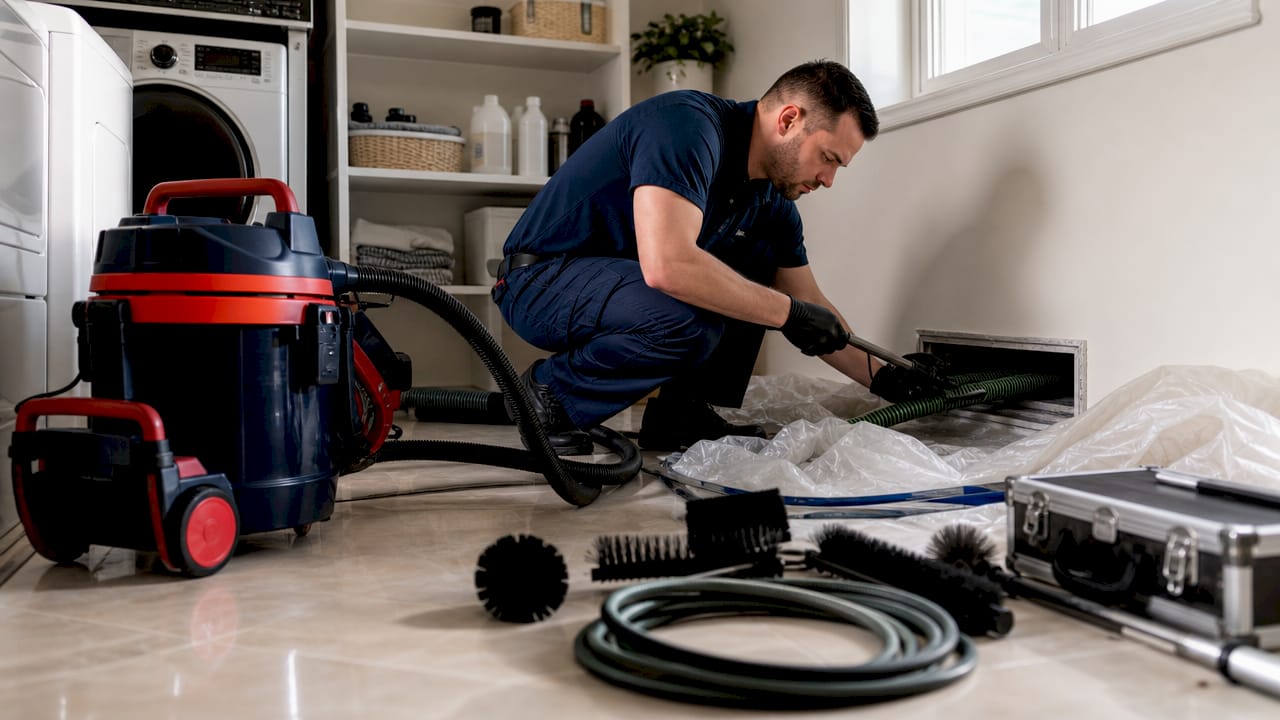
The actual cleaning uses three core methods working together:
- Negative pressure containment. A high-powered vacuum creates suction inside the duct system, pulling loosened particles toward a collection point rather than into your living space.
- Mechanical agitation. Rotating brushes, air whips, or compressed air tools dislodge debris clinging to duct walls. Without agitation, a vacuum alone leaves most buildup in place.
- Full HVAC component cleaning. Blowers, coils, and heat exchangers must be cleaned alongside the ducts. Skipping these components means contamination migrates back into clean ducts within days.
Proper containment is what separates a professional job from a poor one. An inadequately trained service can dislodge dust and spores without capturing them, leaving your home more contaminated than before. HEPA-rated vacuums and sealed duct access points prevent that outcome.
Pro Tip: Ask your technician to show you the vacuum equipment before work starts. A truck-mounted or large portable HEPA vacuum is the standard for professional-grade duct cleaning. A shop vac is not.
When is duct cleaning recommended by the EPA?
The EPA does not recommend routine duct cleaning on a fixed schedule. EPA guidance states that no conclusive evidence supports cleaning ducts that show no visible contamination. That is a significant point many homeowners miss.
Duct cleaning is warranted under these specific conditions:
- Visible mold growth inside ducts or on HVAC components, confirmed by a professional
- Vermin infestation, including rodents or insects living inside the duct system
- Significant debris clogging that visibly restricts airflow through supply or return vents
- Post-construction residue, where renovation dust has entered the duct system
- Documented allergy or respiratory symptoms that worsen indoors and have no other identified source
The distinction between routine maintenance and remediation cleaning matters here. Routine maintenance covers filter changes, coil cleaning, and annual HVAC tune-ups. Remediation cleaning addresses a specific contamination problem. Source removal is recognized by the EPA as a valid indoor air quality strategy, but only when a source of contamination actually exists.
“Duct cleaning only makes sense with visible contamination or a documented air quality problem. Cleaning ducts that are not contaminated provides no measurable benefit and carries real risk if done improperly.”
Unnecessary cleaning also carries financial and physical risk. Disturbing settled dust in clean ducts can temporarily worsen air quality. Annual or routine duct cleaning is not recommended by experts unless a specific trigger is present.
What are the real benefits and limitations of duct cleaning?
Duct cleaning delivers clear benefits when the right conditions exist, but it does not do everything marketing claims suggest. Here is an honest breakdown.
| Claim | Reality |
|---|---|
| Removes dust and allergens from duct surfaces | Accurate. Cleaning reduces surface buildup inside ducts. |
| Improves general indoor air quality | Limited evidence. Filters and ventilation have greater daily impact. |
| Lowers energy bills | Mostly a myth for ducts alone. Efficiency gains come from cleaning coils and blowers. |
| Eliminates mold permanently | No. Mold returns without fixing the moisture source causing it. |
| Reduces allergy symptoms | Possible when contamination is confirmed, not guaranteed otherwise. |
Your home’s air filter is often ten times more important to daily indoor air quality than duct cleaning. A high-quality MERV-rated filter running consistently captures far more airborne particles than a one-time duct cleaning. That does not make duct cleaning worthless. It means duct cleaning works best as part of a broader indoor air quality strategy, not as a standalone fix.
Energy savings from duct cleaning alone are limited. Measurable efficiency gains come from cleaning the blower motor, heat exchangers, and evaporator coils. If a provider cleans only the ducts and promises lower utility bills, that claim is not supported by evidence.
Pro Tip: Pair any duct cleaning service with a coil cleaning and blower inspection. That combination addresses the components where efficiency losses actually occur. You can learn more about why clean AC coils matter for your system’s performance.
How to choose a qualified duct cleaning service
Choosing the wrong provider is worse than not cleaning at all. A poor service can release more contaminants than it removes. These criteria separate qualified providers from unqualified ones.
- NADCA certification. The National Air Duct Cleaners Association certifies technicians who meet training and equipment standards. Ask for proof of certification before scheduling.
- Full HVAC system scope. A legitimate service cleans ducts and all connected components: blower, coils, drain pan, and heat exchanger. Duct-only cleaning leaves contamination pathways open.
- Before-and-after documentation. Reputable providers supply inspection photos or video showing system condition before and after the job. Refusal to provide documentation is a red flag.
- No unnecessary chemical treatments. Sealants and biocides sprayed inside ducts are rarely needed and can introduce new irritants. The EPA advises caution with chemical treatments unless mold is confirmed and the product is EPA-registered for duct use.
- Transparent pricing. Professional duct cleaning typically costs $199 to $339 for systems with up to 10 vents. Prices rise for larger homes or additional component cleaning. A quote far below that range often signals incomplete work or a bait-and-switch approach.
You can also review what to expect from duct cleaning services from an independent industry perspective to cross-check any provider’s claims.
Pro Tip: Get at least two written quotes that specify exactly which components will be cleaned. Compare scope, not just price. A cheaper quote that excludes coil and blower cleaning costs more in the long run.
Key takeaways
Duct cleaning delivers real value when triggered by confirmed contamination, performed by a certified technician, and paired with full HVAC component cleaning rather than treated as a routine annual service.
| Point | Details |
|---|---|
| Definition and scope | Air duct cleaning covers ducts and all HVAC components, not just visible vents. |
| EPA-backed triggers | Clean ducts only when mold, pests, or significant debris are confirmed present. |
| Filters matter more daily | A quality MERV-rated filter improves air quality more consistently than routine duct cleaning. |
| Full system cleaning | Efficiency gains require cleaning blowers and coils, not ducts alone. |
| Provider vetting | Require NADCA certification and before-and-after documentation from any service provider. |
My honest read on duct cleaning after years in the field
Homeowners are regularly sold duct cleaning as a must-do annual service. That framing is not accurate, and it costs people money without delivering results. The EPA’s position is clear: clean when there is a confirmed problem, not on a calendar schedule.
What I have seen work consistently is a layered approach. Keep a high-quality filter in place and change it on schedule. Schedule annual HVAC maintenance that includes coil and blower inspection. Then, if you notice visible debris at vents, a musty smell from supply registers, or a confirmed pest issue, call for a full air duct cleaning service. That sequence addresses the actual sources of indoor air quality problems rather than treating duct cleaning as a cure-all.
The other thing worth saying directly: clean air vents and a well-maintained HVAC system work together. Neither alone is enough. Homeowners who invest in both filtration and periodic professional cleaning when warranted consistently report better comfort and fewer respiratory complaints than those who rely on one or the other.
Do not skip the documentation step when hiring a provider. Before-and-after photos are not a luxury. They are proof that the work was done and done correctly.
— AB
Kcaircontrol’s professional duct cleaning services in Kansas City
Kcaircontrol has served Kansas City homeowners for over 70 years with certified HVAC technicians and equipment built for full-system cleaning. Every duct cleaning service covers the complete HVAC system, including blowers, coils, and heat exchangers, not just the duct runs. Technicians document system condition before and after every job, so you see exactly what was found and what was resolved.
Scheduling is straightforward online, and Kcaircontrol offers transparent pricing with no surprise add-ons. If your system shows signs you need HVAC repair alongside contamination, the team addresses both in a single visit. Reach out today to schedule an inspection and find out whether your ducts need cleaning or just a filter upgrade.
FAQ
What is duct cleaning in simple terms?
Duct cleaning is the professional removal of dust, mold, debris, and contaminants from your home’s air ducts and HVAC components. A certified technician uses high-powered vacuums and agitation tools to clean the full system.
How often should ducts be cleaned?
The EPA does not recommend a fixed cleaning schedule. Clean your ducts only when visible mold, pest infestation, or significant debris buildup is confirmed.
Does duct cleaning improve indoor air quality?
Duct cleaning reduces surface contamination inside ducts but has limited evidence of improving general indoor air quality. Your air filter has a greater daily impact on the air you breathe.
What should I expect from a professional duct cleaning service?
A qualified service includes a pre-cleaning inspection, mechanical agitation, HEPA vacuum containment, full HVAC component cleaning, and before-and-after documentation. Professional duct cleaning costs typically range from $199 to $339 for systems with up to 10 vents.
Can duct cleaning make air quality worse?
Yes, if done improperly. An untrained provider using inadequate equipment can dislodge dust and spores without capturing them, temporarily increasing contamination levels in your home.