

TL;DR:
- Performing a summer AC maintenance checklist helps prevent system failure during peak heat. Regularly inspecting filters, cleaning the outdoor condenser, flushing the drain line, and calibrating the thermostat improve efficiency and reduce repair costs. Scheduling professional maintenance before summer ensures reliable cooling and avoids emergency breakdowns.
A summer AC maintenance checklist is the single most reliable way to prevent your air conditioning system from failing when outdoor temperatures peak. The U.S. Department of Energy and This Old House both confirm that routine preventive AC care, covering filters, outdoor units, drain lines, and thermostats, keeps your system running efficiently and cuts energy costs. Skipping these steps before the cooling season means risking expensive emergency repairs and uncomfortable heat waves indoors. This guide gives you every step you need, in the right order, whether you own your home or rent it.
1. What does a summer AC maintenance checklist include?
A seasonal AC inspection covers six core areas: air filters, the outdoor condenser unit, the condensate drain line, the thermostat, indoor vents and ductwork, and professional service. Each area addresses a specific failure point that becomes more likely as temperatures rise and your system runs longer hours. Missing even one step can trigger a chain reaction of problems. For example, a clogged filter strains the blower motor, which then overheats the compressor, which then fails at the worst possible time.
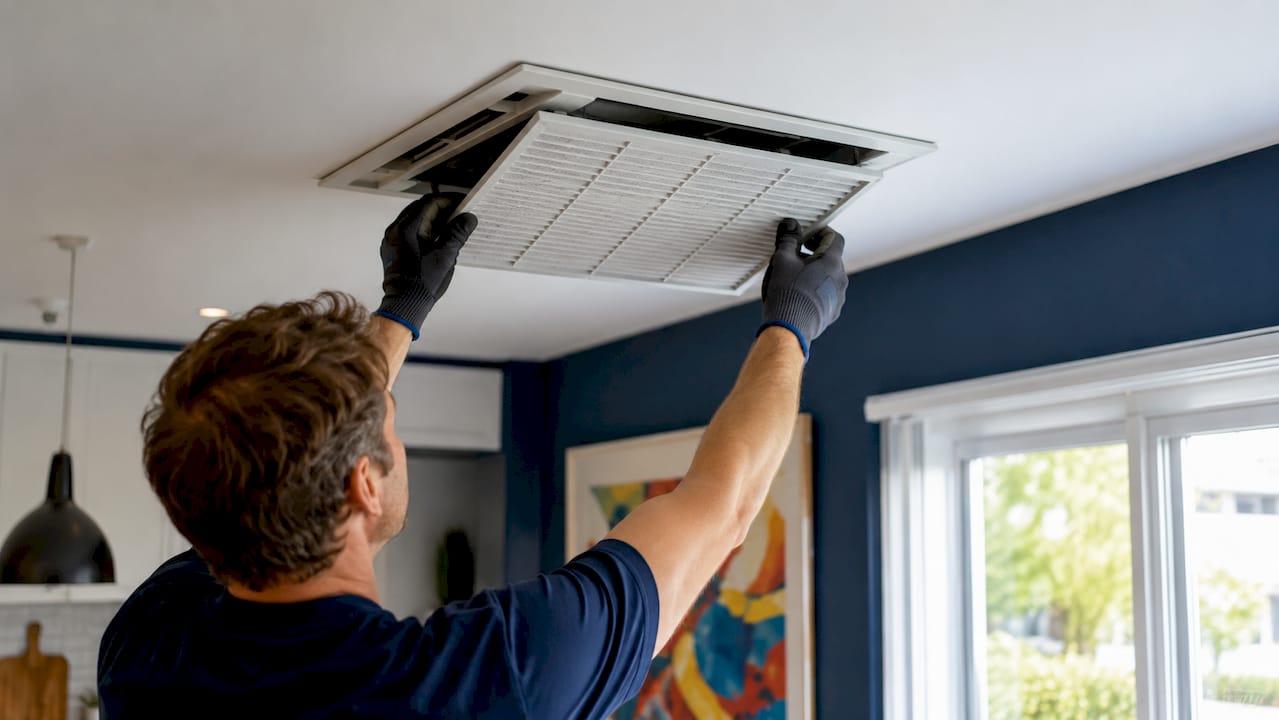
The industry term for this process is preventive HVAC maintenance. You may also see it called a seasonal tune-up or an AC service checklist. All three phrases describe the same structured approach to keeping your cooling system reliable before peak demand hits.
2. Air filter inspection and replacement
Replacing or cleaning AC filters every 1–2 months during the cooling season maintains airflow and protects system efficiency. A dirty filter does not just reduce air quality. It forces your system to work harder, which raises your energy bill and shortens the life of your equipment.
Here is what to check and when:
- Inspect the filter monthly during summer, especially if you run the AC daily.
- Replace every 30–90 days depending on filter type, household dust levels, and whether you have pets.
- Match the MERV rating to your system. Higher MERV ratings trap more particles but restrict airflow in systems not designed for them.
- Check more frequently if you have pets, live near construction, or run the system continuously.
One fact most homeowners miss: clogged filters cause dirt to bypass the filter and coat the evaporator coil directly. That coil buildup reduces cooling capacity and requires professional cleaning to fix. A filter change alone does not undo that damage.
Pro Tip: This Old House recommends balancing filter efficiency with airflow. A filter that is too restrictive for your system can cause the same airflow problems as a dirty one. Check your system manual for the recommended MERV range before upgrading.
3. Outdoor condenser unit cleaning and clearance
The outdoor condenser unit is your AC system’s heat exhaust point. If airflow around it is blocked, the entire system loses efficiency. Energy.gov recommends at least 2 feet of clearance around the unit on all sides, with nothing overhead blocking airflow.
Follow these steps each season:
- Remove leaves, twigs, and grass clippings from around and inside the unit casing.
- Trim back shrubs and plants to maintain the 2-foot clearance zone.
- Rinse the condenser coils gently with a garden hose from the inside out. Never use a pressure washer. High pressure bends the delicate aluminum fins.
- Straighten bent fins with a fin comb, available at most hardware stores. Bent fins block airflow through the coil.
- Clear the unit’s drain channels to prevent water overflow and potential water damage to your foundation or siding.
For more detail on why coil condition matters so much, the Kcaircontrol guide on clean AC coils explains the efficiency impact clearly.
Pro Tip: Placing the condenser unit on the north or east side of your home, or shading it with a fence or trellis (without blocking airflow), reduces the heat load on the unit and can improve efficiency. Never enclose it completely.
4. Condensate drain line flushing
The condensate drain line removes moisture your AC pulls from indoor air. Clogged drain lines frequently cause the system to shut off unexpectedly or overflow, creating water damage to ceilings, walls, and flooring. Most homeowners never think about this line until water appears on the floor near the air handler.
Flush the drain line monthly during summer using these steps:
- Locate the PVC drain line near your indoor air handler unit.
- Pour one cup of white distilled vinegar into the access port on the drain line.
- Wait 30 minutes, then flush with clean water.
- Check the drain pan beneath the air handler for standing water. Standing water means the line is already partially blocked.
- If flushing does not clear the blockage, contact a professional. A wet/dry vacuum can also pull clogs from the exterior drain outlet.
Partially clogged drains often cause shutdowns or overflow before you notice any cooling problems. Preventive cleaning is far cheaper than water damage repair.
Pro Tip: Drop a drain pan tablet (available at HVAC supply stores) into the drain pan at the start of summer. These slow-dissolve tablets inhibit algae and mold growth, which are the most common causes of drain line clogs.
5. Thermostat accuracy and calibration check
Thermostat calibration directly affects energy costs and cooling reliability. An inaccurate thermostat causes your system to cycle on and off too frequently, which wastes energy and puts extra wear on the compressor. This is one of the most overlooked steps in any AC repair checklist.
Test your thermostat before summer heat arrives:
- Set the thermostat to cooling mode and lower the temperature setting by 5 degrees. The system should start within a few minutes.
- Place a reliable digital thermometer near the thermostat. If the room temperature reading differs from the thermostat display by more than 2 degrees, the thermostat needs calibration or replacement.
- Check the thermostat location. Direct sunlight, nearby lamps, or drafts from vents cause false readings that make the system run longer than needed.
If you have a programmable or smart thermostat like a Honeywell Home T6 Pro or an Ecobee SmartThermostat, verify that the summer schedule is active and set correctly. Programmable thermostats reduce cooling costs by automatically raising the temperature when the home is empty.
Energy.gov confirms that checking thermostat settings and seals on window units are recommended homeowner steps that directly improve system efficiency and comfort.
6. Indoor vents, registers, and ductwork inspection
Blocked or leaking ductwork wastes a significant portion of the conditioned air your system produces before it ever reaches your living space. This step is part of any thorough summer cooling system checklist and takes less than 30 minutes to complete.
Walk through your home and check the following:
- Open all supply and return vents. Closed vents do not save energy. They create pressure imbalances that strain the blower and can damage the system.
- Remove vent covers and vacuum out dust buildup. Heavy dust restricts airflow and degrades indoor air quality.
- Check for furniture or drapes blocking vents. Even partial blockage reduces airflow to that room and forces the system to run longer.
- Test for duct leaks by holding a lit incense stick near accessible duct joints while the system runs. Smoke that wavers or blows away indicates a leak.
- Listen during a test run. Rattling, banging, or whistling sounds point to loose duct sections, debris inside ducts, or failing components.
For Kansas City homeowners, the Kcaircontrol HVAC maintenance checklist includes localized guidance on duct inspection specific to the region’s humidity levels.
7. When to call a professional for AC service
DIY maintenance covers the surface-level tasks, but professional AC maintenance is required for coil cleaning, refrigerant level checks, and electrical component inspection. These are not tasks homeowners can safely or effectively perform without specialized tools and certifications.
Here is a clear comparison of what you can handle versus what requires a licensed HVAC technician:
| Task | DIY or Professional? |
|---|---|
| Filter replacement | DIY |
| Condenser unit rinsing | DIY |
| Condensate drain flushing | DIY |
| Thermostat testing | DIY |
| Evaporator coil cleaning | Professional |
| Refrigerant level check | Professional |
| Electrical terminal inspection | Professional |
| Blower motor lubrication | Professional |
Schedule a professional tune-up once a year, ideally in spring before peak cooling demand. Annual AC tune-ups detect small problems that prevent breakdowns and improve efficiency during the hottest months. Signs that require immediate professional service include ice forming on the refrigerant lines, warm air from supply vents despite a running system, and a sudden spike in your energy bill without a change in usage.
Pro Tip: Book your professional tune-up in March or April. HVAC technicians are significantly harder to schedule once summer heat arrives and emergency calls spike. Early booking also often comes with lower service rates.
Key takeaways
A complete summer AC maintenance checklist, covering filters, the condenser unit, the drain line, the thermostat, and ductwork, is the most reliable way to prevent breakdowns and control energy costs before peak heat arrives.
| Point | Details |
|---|---|
| Replace filters regularly | Change or clean filters every 30–90 days to protect airflow and the evaporator coil. |
| Clear the condenser unit | Maintain 2 feet of clearance and rinse coils gently each season to sustain outdoor unit efficiency. |
| Flush the drain line monthly | Use a vinegar solution to prevent clogs that cause shutdowns and water damage. |
| Test thermostat accuracy | Verify calibration before summer to avoid excessive cycling and wasted energy. |
| Schedule professional service | Book an annual tune-up in spring for coil cleaning, refrigerant checks, and electrical inspection. |
What I have learned from years of watching AC systems fail in summer
The most common pattern I see is homeowners who do everything right in the fall and nothing in the spring. They replace the furnace filter in October, feel good about it, and then forget the AC exists until June. By then, the condenser coils are packed with cottonwood and the drain line is growing a small ecosystem.
The second most common mistake is treating filter replacement as the whole job. Changing the filter is the easiest step, so people do it and feel like they are done. But DIY filter changes alone do not keep evaporator coils clean. Coil buildup happens slowly and silently, and by the time your system is struggling to cool the house on a 95-degree day, the damage is already done.
What actually works is building a short habit at the start of every cooling season. Spend 45 minutes in May going through the checklist above. Write the filter replacement date on a piece of tape and stick it to the unit. Pour vinegar down the drain line. Walk the perimeter of the condenser. Then book the professional tune-up before you need it urgently.
The homeowners I see who never have summer emergencies are not the ones with the newest systems. They are the ones who treat maintenance as a fixed seasonal habit rather than a reaction to a problem. That shift in mindset is worth more than any single repair.
— AB
Keep your AC ready for Kansas City summers with Kcaircontrol
If your checklist reveals something beyond a filter swap or a garden hose rinse, Kcaircontrol is ready to help. With over 70 years of experience serving Kansas City homeowners, we handle everything from professional AC tune-up services to same-day repairs when your system stops cooling.

Do not wait until the first heat wave to find out your system has a problem. Our licensed HVAC technicians inspect coils, check refrigerant levels, test electrical components, and clear drain lines thoroughly. If something goes wrong mid-summer, our AC repair team responds fast to restore your comfort. Schedule your pre-summer inspection with Kcaircontrol today and head into the hottest months with confidence.
FAQ
How often should I replace my AC filter in summer?
Replace or clean your AC filter every 1–2 months during the cooling season. Homes with pets, high dust, or continuous AC use may need monthly changes.
What happens if I skip the condensate drain cleaning?
Clogged condensate drains cause the AC to shut off unexpectedly or overflow, leading to water damage in your home. Flushing monthly with white vinegar prevents this.
Can I clean the condenser coils myself?
You can rinse the outdoor condenser coils with a garden hose on a gentle setting. However, professional coil cleaning for the indoor evaporator coil requires specialized tools and should be done by a licensed technician.
How do I know if my thermostat is inaccurate?
Place a digital thermometer next to the thermostat and compare readings. A difference of more than 2 degrees means the thermostat needs calibration or replacement to avoid inefficient cycling.
When is the best time to schedule a professional AC tune-up?
Schedule your annual professional tune-up in spring, before peak cooling demand. Early scheduling is easier to book and often costs less than emergency service calls in July or August.