
TL;DR:
- Common heating system problems include clogged filters, thermostat malfunctions, ignition failures, and low boiler pressure, which reduce home warmth and raise energy costs. Early detection and routine maintenance can prevent costly repairs, with replacement recommended for systems over 15 years old or with major faults like cracked heat exchangers. Immediate professional attention is essential for safety issues such as gas leaks, carbon monoxide alarms, or persistent odd odors.
Common heating system problems are specific, diagnosable faults, including clogged air filters, thermostat malfunctions, ignition failures, and low boiler pressure, that reduce your home’s warmth and drive up energy costs. Space heating accounts for about 29% of average U.S. home energy use, which means even a minor fault in your furnace or boiler translates directly into higher monthly bills. The industry term for diagnosing and correcting these faults is HVAC troubleshooting, and knowing the difference between a quick DIY fix and a call to a licensed technician can save you hundreds of dollars. This guide covers the most frequent heating system issues, practical repair steps, and the warning signs that tell you it’s time to stop patching and start replacing.
1. Common heating system problems every homeowner should know
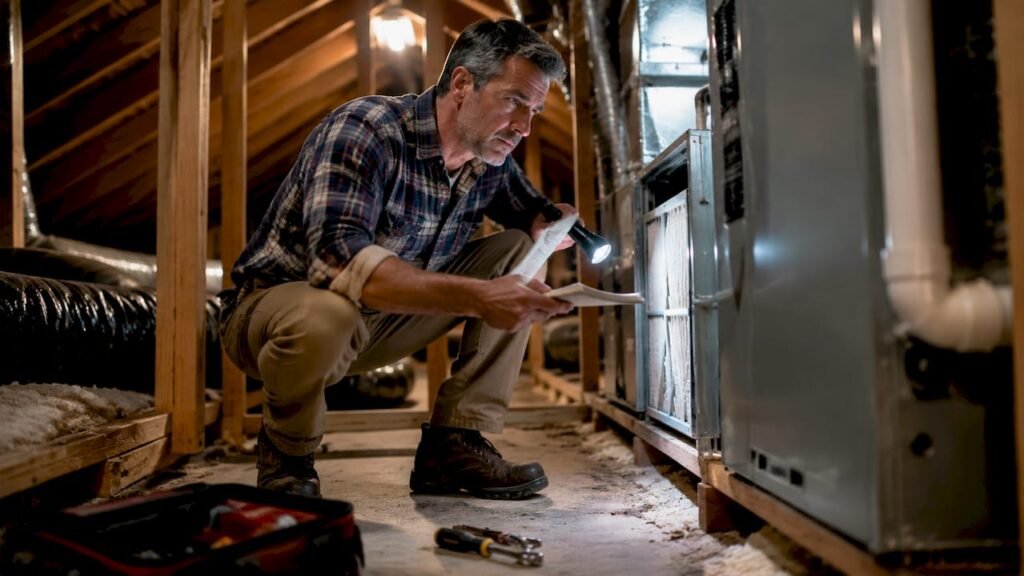
The most frequent heating system issues fall into a predictable set of categories. Recognizing them early prevents small faults from becoming expensive repairs or outright safety hazards.
- Dirty or clogged air filters. A filter blocked with dust restricts airflow, forces the blower motor to work harder, and can trigger the furnace’s high-limit switch, causing the unit to shut down entirely.
- Thermostat malfunctions. Dead batteries, incorrect settings, or a faulty sensor cause the thermostat to misread room temperature, resulting in no heat or short cycling.
- Ignition or pilot light failure. Modern furnaces use electronic ignitors rather than standing pilot lights. A cracked ignitor or a failed hot surface ignitor prevents the burner from firing.
- Low boiler pressure. Standard boiler pressure sits between 1.0 and 1.5 bar. Readings below that range point to a leak or a faulty pressure relief valve, both of which require professional attention.
- Strange noises. Banging, rattling, or a high-pitched kettling sound each point to different faults, from loose panels to mineral buildup on the heat exchanger.
- Tripped circuit breakers. A furnace that won’t start at all is often the result of a tripped breaker, a dead thermostat battery, or an unlatched furnace door rather than a mechanical failure.
Pro Tip: Replace your furnace filter every 30 to 90 days depending on filter type and household conditions. Homes with pets or allergy sufferers should lean toward the 30-day end of that range.
2. How to troubleshoot and fix common furnace and boiler problems
Up to 50% of winter emergency calls trace back to basic, user-fixable issues like tripped breakers, unlatched furnace doors, or dead thermostat batteries. That statistic means roughly half of all after-hours service calls could be resolved by the homeowner in under ten minutes. Work through these steps before scheduling a technician.
- Check the thermostat first. Replace the batteries, confirm the system is set to “Heat” and not “Cool” or “Fan Only,” and verify the temperature setpoint is at least 5 degrees above the current room temperature.
- Inspect the furnace door and power switch. Most furnaces have a safety interlock that cuts power when the access panel is open or unlatched. Press the door firmly closed and confirm the power switch on the unit is in the “On” position.
- Reset the circuit breaker once. If the breaker has tripped, reset it a single time. Repeatedly resetting a tripped breaker can cause permanent component damage or create a fire hazard. If it trips again immediately, stop and call a professional.
- Check and replace the air filter. A visibly gray or clogged filter is often the direct cause of furnace shutdowns. Slide out the old filter, note the size printed on the frame, and install a clean replacement.
- Inspect the pilot light or ignitor. On older systems with a standing pilot, confirm the flame is burning blue. On modern systems, listen for the clicking of the electronic ignitor when the thermostat calls for heat. No click or no flame after three attempts means the ignitor likely needs replacement.
- Check boiler pressure. Locate the pressure gauge on the front of the boiler. A reading below 1.0 bar means the system needs repressurizing through the filling loop, a task most homeowners can do with the manufacturer’s instructions.
Pro Tip: If you smell natural gas at any point during troubleshooting, stop immediately. Smelling gas or seeing sparks mandates immediate evacuation and a call to your gas utility, not the HVAC company.
3. Signs your heating system needs repair or replacement
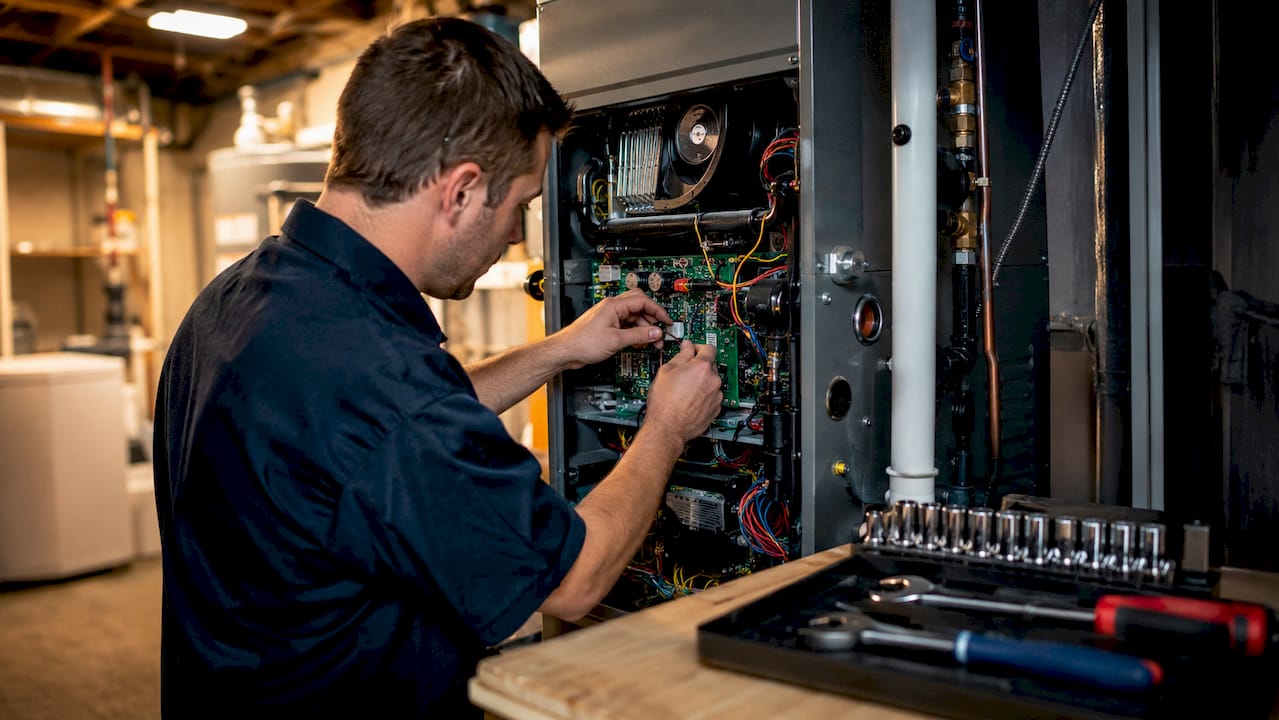
Knowing when to repair versus replace is one of the most financially significant decisions a homeowner faces with an aging HVAC system. Silent symptoms like uneven heat or rising bills are often the earliest signs of system failure, appearing weeks or months before a complete shutdown. Catching them early gives you time to plan rather than react in an emergency.
Repair is the standard first choice for systems under 12 years old with isolated faults. Systems older than 12 to 15 years that require major component replacements, such as a heat exchanger, blower motor, or control board, frequently cost more to fix than to replace when you factor in continued energy inefficiency and the likelihood of further breakdowns.
| Indicator | Repair or replace? |
|---|---|
| System under 12 years old, single component failure | Repair |
| Inconsistent room temperatures, rising energy bills | Repair and inspect for dirty coils or refrigerant issues |
| Repeated breakdowns within one heating season | Evaluate replacement |
| System over 15 years old with major component failure | Replace |
| Cracked heat exchanger or persistent gas leak | Replace immediately for safety |
| Repair cost exceeds 50% of new system price | Replace |
A cracked heat exchanger is the one fault that removes repair from the conversation entirely. Carbon monoxide can leak through even a hairline crack, creating a life-safety hazard that no patch repair resolves reliably. If a technician identifies a cracked heat exchanger, replacement is the only responsible path forward.
Pro Tip: Use the “5,000 rule” as a quick filter: multiply the system’s age in years by the estimated repair cost. If the result exceeds $5,000, replacement typically delivers better long-term value.
4. Hidden energy efficiency and safety concerns
Some of the most costly heating system issues don’t announce themselves with a shutdown. They show up quietly on your utility bill or in the air you breathe. Variations in room temperature and rising bills often signal early system degradation, such as dirty coils or refrigerant leaks, before any complete failure occurs.
Heat pumps carry a specific risk that many homeowners overlook. When the outdoor unit malfunctions, the system defaults to auxiliary or emergency heat mode. Running a heat pump in emergency mode long term can double or triple your energy bills, and the system will display an “Aux” or “EM Heat” indicator on the thermostat. If you see that indicator running for more than an hour in mild weather, the outdoor unit needs inspection.
Hydronic systems, meaning boilers with radiators or radiant floor loops, develop a specific noise problem called kettling. Kettling is caused by limescale buildup on the heat exchanger and produces a low rumbling or boiling sound. Bleeding the radiators won’t fix it. The system requires a full chemical flush every three to five years to clear the deposits.
Safety warning signs that require immediate professional attention:
- Carbon monoxide detector alarm. Evacuate first, call 911, then your HVAC technician.
- Yellow or orange burner flame instead of blue, which indicates incomplete combustion.
- Soot or black marks around the furnace or boiler casing.
- Persistent gas odor anywhere in the home.
- Unexplained headaches or nausea in household members, which can indicate low-level CO exposure.
Pro Tip: Schedule a preventive maintenance visit every fall before heating season. A technician will clean the heat exchanger, test combustion gases, and catch faults that no homeowner inspection can reliably identify.
Key takeaways
Most common heating system problems are preventable with routine maintenance and early identification of warning signs before a full system failure occurs.
| Point | Details |
|---|---|
| Filters drive most failures | Replace furnace filters every 30 to 90 days to prevent shutdowns and efficiency loss. |
| Half of emergencies are DIY-fixable | Check thermostat batteries, breakers, and furnace doors before calling a technician. |
| Age determines repair vs. replace | Systems over 15 years with major faults almost always cost less to replace than repair. |
| Hidden symptoms cost money | Rising bills and uneven heat signal early degradation; address them before a full shutdown. |
| Safety faults require immediate action | Cracked heat exchangers, gas odors, and CO alarms are never a wait-and-see situation. |
What I’ve learned after years of watching homeowners handle heating problems
The single most common mistake I see is the repeated breaker reset. A homeowner’s furnace trips the breaker, they reset it, it trips again, they reset it again, and by the time a technician arrives, a component that could have been repaired has been burned out entirely. One reset is diagnostic information. Two resets in a row is damage.
The second pattern I notice is that homeowners treat rising energy bills as a utility company problem rather than a system problem. When your heating costs climb 20% from one winter to the next without a change in weather or usage habits, your system is telling you something specific. It’s worth pulling your bills from the last two winters and comparing them before your next maintenance appointment. That data gives a technician a concrete starting point.
My practical recommendation is to build a two-task fall routine: replace the filter and test the thermostat before the first cold snap of the season. Those two steps alone eliminate the majority of early-season service calls. For anything beyond that, the cost of a professional inspection is almost always less than the cost of the repair it prevents. Proactive communication with your HVAC technician, including sharing your bill history and any noises you’ve noticed, consistently leads to faster diagnosis and better outcomes than waiting for a breakdown to describe symptoms under pressure.
— AB
Kcaircontrol is ready when your heating system isn’t
When a heating system issue goes beyond a filter swap or a thermostat battery, you need a team that responds fast and diagnoses accurately. Kcaircontrol has served Kansas City homeowners for over 70 years, handling everything from furnace repair and boiler troubleshooting to full system replacements. Whether you’re dealing with a no-heat emergency or a system that’s been running inefficiently for months, the Kcaircontrol team brings the local expertise and equipment to fix it right the first time.
If your furnace isn’t performing or you’re seeing any of the warning signs covered in this guide, don’t wait for a complete breakdown. Explore your emergency repair options and schedule service with Kcaircontrol today to restore comfort and safety to your home before the next cold night arrives.
FAQ
Why is my heater not working at all?
The most common causes are a tripped circuit breaker, dead thermostat batteries, an unlatched furnace door, or a clogged filter that triggered the high-limit switch. Work through those four checks before calling a technician, since up to half of emergency calls are resolved by one of these simple fixes.
What are the signs of heating failure I shouldn’t ignore?
Uneven room temperatures, a yellow or orange burner flame, soot around the unit, a persistent gas odor, and a carbon monoxide detector alarm all require immediate professional attention. A cracked heat exchanger in particular is a life-safety issue that cannot be repaired and requires full system replacement.
How do I know if I should repair or replace my furnace?
Systems under 12 years old with a single component failure are generally worth repairing. For systems over 15 years old with major faults, repair costs often exceed the value of continued operation, and replacement delivers better energy efficiency and reliability.
What causes a boiler to make a rumbling or kettling noise?
Kettling is caused by limescale deposits on the heat exchanger and is common in hydronic systems with hard water. Bleeding the radiators does not fix it. The system requires a full chemical flush, typically every three to five years.
How often should I schedule professional heating maintenance?
Once per year before heating season is the standard recommendation. An annual furnace tune-up covers combustion testing, heat exchanger inspection, and cleaning tasks that prevent the majority of mid-winter breakdowns.