
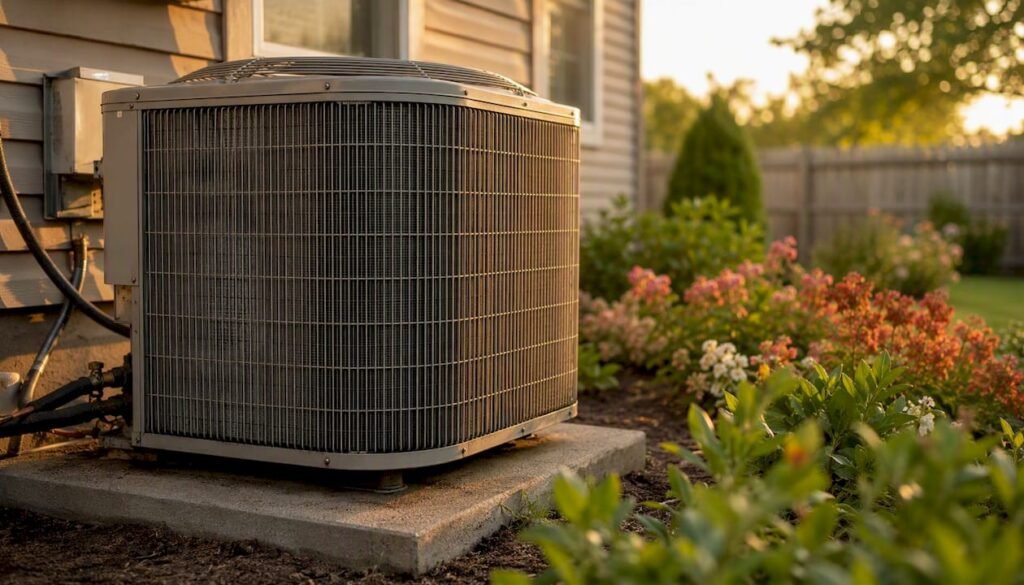
Yes, a hybrid (dual-fuel) heat pump delivers real energy, cost, and emissions benefits for most homeowners — provided the system is correctly sized and the switching logic is properly programmed. Field monitoring by Natural Resources Canada recorded roughly a 30% reduction in greenhouse gas emissions over a full heating season for homes using a hybrid system with smart switching, compared with a natural gas furnace running alone. Dynamic simulations report primary energy savings in the range of 5%–22% depending on climate, heat pump sizing, and control strategy.
The core benefits of a hybrid heat pump system break down like this:
- Energy savings: 5%–22% primary energy reduction in simulation studies; real-world field results show meaningful fuel and emissions cuts.
- Lower operating costs: The heat pump handles the majority of heating hours at a higher efficiency than a furnace, reducing gas consumption during mild weather.
- Emissions reductions: Replacing furnace hours with heat pump operation cuts greenhouse gas output, with monitored homes showing roughly 30% GHG reductions.
- Comfort and reliability: The furnace provides fast, high-capacity backup on the coldest days, so you never sacrifice warmth.
- Grid resilience: Hybrids reduce peak electric demand in cold climates by leaning on gas for extreme cold snaps.
One honest caveat: actual savings depend heavily on your local electricity and gas prices, your climate zone, and how well the system’s switching logic is configured. A poorly tuned hybrid can underperform a well-maintained furnace. Get those variables right, and the case for a hybrid is strong.
Key Takeaways
A hybrid heat pump delivers its strongest benefits when the control strategy is correctly programmed, the system is properly sized, and local energy prices favor heat pump operation during mild weather.
| Point | Details |
|---|---|
| Savings range | Simulation studies report 5%–22% primary energy savings; field monitoring shows roughly 30% GHG reductions with smart switching. |
| Control logic is decisive | Switching strategy (bivalent temperature, COP-based, or economic mode) determines whether a hybrid meets its projected savings. |
| Best-fit homes | Mixed-climate homes with existing gas connections, ducted systems, and an aging AC are the strongest candidates. |
| Incentives reduce payback | Federal 25C tax credits and utility rebates can significantly lower net installation cost; check current local programs before budgeting. |
| Kcaircontrol’s role | Kcaircontrol provides Manual J assessments, control-strategy programming, and ongoing furnace and heat pump maintenance for Kansas City homeowners. |
Table of Contents
- What is a hybrid heat pump system?
- How do hybrid heat pump systems work, and why does control logic determine your savings?
- What are the concrete benefits of a hybrid heat pump for homeowners?
- When does a hybrid heat pump make sense for your home?
- What do hybrid heat pumps cost, and what affects your payback?
- What are the drawbacks and limitations of hybrid heat pumps?
- What should you expect at installation, and what questions should you ask your contractor?
- What do studies and government guidance actually report about hybrid system savings?
- How Kcaircontrol evaluates whether a hybrid is the right solution for your home
- Kcaircontrol helps you evaluate, install, and finance a hybrid system
- Sources
What is a hybrid heat pump system?
A hybrid heat pump, also called a dual-fuel heat pump, pairs an electric heat pump with a fuel-burning backup — typically a gas furnace or a condensing boiler — under a shared control system. The two components work together: the heat pump handles heating during mild and moderate temperatures, while the furnace or boiler takes over when outdoor conditions push beyond the heat pump’s efficient operating range.
The U.S. Department of Energy describes heat pumps as highly efficient devices capable of providing both heating and cooling from a single system, performing particularly well in mild to moderate climates. A hybrid configuration extends that value into colder climates by adding a fueled backup for peak demand.
Common configurations include:
- Air-source heat pump + gas furnace: The most common residential setup in North America, using existing ductwork and a shared air handler.
- Air-to-water heat pump + condensing boiler: Common in hydronic (radiator or radiant floor) systems, particularly in European-style homes.
- Shared air handler setups: Some systems use a single indoor cabinet housing both the heat pump coil and the furnace heat exchanger, simplifying installation.
A hybrid differs from a heat pump with electric resistance backup in one important way: the backup is a fueled appliance, not electric strips. That distinction matters because a gas furnace or boiler can deliver high heat output at very low outdoor temperatures without spiking your electric bill. For homeowners who want to learn more about heat pump basics before diving into hybrid specifics, that foundation helps.
Hybrid systems retrofit well into homes with existing ducted central heating, and some hydronic setups can also accommodate an air-to-water heat pump paired with an existing boiler. Homes without any gas connection are generally not candidates for a dual-fuel hybrid.
How do hybrid heat pump systems work, and why does control logic determine your savings?
The operational logic is straightforward in concept but critical in execution. During mild weather, the heat pump runs alone, moving heat from outdoor air into your home at a coefficient of performance (COP) that typically exceeds 2.0 — meaning it delivers more than two units of heat energy for every unit of electricity consumed. As outdoor temperatures drop, the heat pump’s COP falls. At some threshold, the furnace or boiler becomes the more cost-effective or more capable heat source, and the system switches.

That threshold is called the bivalent temperature or balance point, and it sits around -7°C (roughly 19°F) in some engineering studies, though it varies by equipment and climate. Below that point, the furnace takes over fully (alternative mode) or both systems run simultaneously (parallel mode).
The four main switching strategies used in hybrid systems:
- Fixed bivalent temperature: The system switches at a preset outdoor temperature, regardless of energy prices or real-time COP.
- COP-based switching: The controller monitors actual heat pump performance and switches when the furnace becomes more efficient per unit of heat delivered.
- Economic (time-of-use) mode: Switching decisions factor in electricity and gas prices, shifting more load to whichever fuel is cheaper at that moment.
- Parallel/simultaneous operation: Both the heat pump and furnace run together during extreme cold, maximizing heat output.
Research on hybrid system design rules confirms that switching logic is the single most important factor determining whether a hybrid achieves its projected savings. A system set to switch too early — favoring the furnace at temperatures where the heat pump still performs well — can eliminate most of the expected efficiency gains.
The MDPI Energies analysis of hybrid control strategies found that maximizing heat pump utilization hours typically produces the best primary energy outcomes. Economic switching modes can optimize for cost rather than energy, which may produce different results depending on your local tariff structure.
Pro Tip: Ask your installer to show you the programmed bivalent temperature and explain why they chose it for your specific equipment and climate. A number pulled from a default setting rather than a load calculation is a red flag.
What are the concrete benefits of a hybrid heat pump for homeowners?
The advantages of hybrid heat pumps span energy efficiency, operating costs, comfort, emissions, and grid resilience. Here is what the evidence actually shows.
Primary energy and fuel savings are the headline benefit. Simulation studies report a range of 5%–22% primary energy savings compared with furnace-only or heat-pump-only alternatives, with the spread driven by control strategy, climate, and sizing. That range is wide because a well-controlled hybrid in a mixed climate outperforms a poorly configured one in a cold climate by a significant margin.
Operating cost reductions follow from running the heat pump during the majority of heating hours, when its COP makes it cheaper to operate than a gas furnace on a per-BTU basis. The exact savings depend on your local electricity and gas prices. In regions where gas is expensive relative to electricity, the heat pump’s efficiency advantage translates directly into lower monthly bills. For practical guidance on optimizing home heating costs, the relationship between tariff structure and system mode matters a great deal.
Field evidence: NRCan’s monitored homes with smart switching controls recorded approximately a 30% reduction in greenhouse gas emissions over a complete heating season compared with natural gas furnace operation alone.
Comfort improvements are real and often underappreciated. Heat pumps deliver consistent, even warmth during mild weather rather than the on-off cycling of a furnace. When temperatures plunge, the furnace kicks in with high-capacity heat recovery, so you never wait for the house to warm up on a cold morning. One system handles both heating and cooling, which simplifies your home’s mechanical setup.
Grid and resilience benefits are less visible to individual homeowners but matter at scale. System-level modeling shows hybrid heat pumps can significantly reduce peak electric capacity needs in cold regions by using existing gas infrastructure for rare extreme-cold days, rather than requiring utilities to build additional generating capacity for those peak hours.
Additional benefits worth noting:
- Year-round heating and cooling from a single outdoor unit reduces equipment footprint.
- Backup heating from a fueled source provides reliability during power outages (with a generator) or extreme cold events.
- Reduced gas consumption compared with furnace-only operation lowers your home’s carbon footprint even before any grid decarbonization occurs.
When does a hybrid heat pump make sense for your home?
Not every home is a strong candidate, and knowing the best-fit scenarios saves you from an expensive mismatch.
Hybrid systems tend to perform best when:
- You live in a mixed or mid-temperature climate with cold winters but not extreme sustained cold (think the Midwest, Mid-Atlantic, or Pacific Northwest).
- Your home already has a gas connection and a ducted forced-air system.
- You are replacing an aging central air conditioner and want to add heating efficiency without replacing a recently installed or still-functional furnace.
- Full electrification is cost-prohibitive because your electrical panel, wiring, or utility connection would need a significant upgrade.
- Your home has high heating demand that a heat pump alone would struggle to meet on the coldest days of the year.
Retrofit cases are where hybrids shine most clearly. If your furnace has several years of life remaining but your AC is due for replacement, adding a heat pump to that existing furnace is often the most cost-effective path to improved efficiency. You get the heat pump’s efficiency benefits for the bulk of heating hours without abandoning a working appliance.
When a different approach may serve you better:
A straight air-source heat pump without a gas backup makes more sense in mild climates where temperatures rarely drop below 20°F, or in fully electric homes where there is no gas infrastructure to leverage. If federal or state incentives for full electrification are substantial in your area, the math may favor going all-electric rather than hybrid. Homes without existing ductwork face higher installation costs for any forced-air system, hybrid or otherwise, and may be better served by a mini-split heat pump or a hydronic system.
Pro Tip: Before committing to a hybrid, pull your last 12 months of gas and electric bills and ask your contractor to model the switching economics at your actual local rates. The payback period can shift significantly based on your specific tariff.
What do hybrid heat pumps cost, and what affects your payback?
Hybrid systems carry a higher upfront cost than replacing a furnace or air conditioner alone, because you are installing two heating systems with integrated controls. The incremental cost over a standard AC replacement varies by equipment brand, system size, and whether ductwork modifications or electrical upgrades are needed.
Key cost drivers:
- Equipment: The heat pump outdoor unit, refrigerant line set, and any new controls or thermostats add cost over a straight AC replacement.
- Controls and commissioning: A properly programmed smart thermostat or dedicated hybrid controller is not optional — it is what makes the system perform as designed.
- Ductwork condition: Leaky or undersized ducts reduce heat pump efficiency and may require sealing or resizing before installation.
- Hydronic work: Air-to-water hybrid systems require buffer tanks and additional piping, which adds labor and materials cost.
Savings context: Studies report annual operating cost savings in the range of 4%–9% in some modeled scenarios, with wider ranges possible depending on climate and tariff structure. The MDPI Energies simulation study found that primary energy savings of 5%–22% are achievable, with the higher end requiring well-optimized control strategies.
Incentives can meaningfully shorten payback. The federal Inflation Reduction Act’s 25C tax credit covers a portion of qualifying heat pump installation costs for homeowners. Many utilities and state energy offices offer additional rebates. Check the ENERGY STAR rebate finder and your utility’s website for current programs in your area — these change regularly and can reduce net installation cost by hundreds to thousands of dollars.
Payback periods vary widely. A homeowner replacing an aging AC in a mixed climate with favorable electricity-to-gas price ratios and available incentives may see payback in five to eight years. A homeowner in a very cold climate with cheap gas and expensive electricity may see a longer timeline. The furnace upgrade economics are relevant context when comparing hybrid versus furnace-only replacement paths.
What are the drawbacks and limitations of hybrid heat pumps?
A balanced view requires acknowledging the real downsides.
Higher upfront cost and system complexity are the most consistent objections. You are paying for two heating systems, integrated controls, and the expertise to commission them correctly. If the controls are not set up properly, you may not recover that investment through savings.
Cold-weather performance limits are inherent to heat pump technology. As outdoor temperatures drop below roughly 0°F to 5°F, most air-source heat pumps lose significant capacity and COP. The furnace backup handles this, but it means the heat pump’s efficiency advantage disappears precisely when heating demand is highest. In climates with long, severe winters, the heat pump may cover a smaller fraction of annual heating hours than in milder regions.
Suboptimal savings from poor sizing or switching logic are a real risk. A heat pump sized too small for the home’s load will hand off to the furnace too early, reducing heat pump hours and savings. A bivalent temperature set too conservatively has the same effect. This is not a flaw in the technology; it is a commissioning and design problem — but it is common enough to warrant scrutiny.
Maintenance and compatibility considerations add complexity. You now have two heating systems to service: annual furnace maintenance plus heat pump maintenance (coil cleaning, refrigerant checks, defrost cycle verification). Hydronic hybrid systems add buffer tanks and additional piping to that list. Outdoor unit placement matters for noise, airflow, and defrost drainage. Some older homes have ductwork that is not sized for heat pump airflow rates, which can cause comfort and efficiency problems.
What should you expect at installation, and what questions should you ask your contractor?
Getting the installation right protects your investment. Here is a practical checklist for conversations with your HVAC contractor.
Before installation:
- Confirm that a Manual J load calculation will be performed — not a rule-of-thumb sizing estimate. Proper sizing determines both the heat pump capacity and the bivalent temperature. For guidance on choosing the right heating system, load calculation methodology is the foundation.
- Verify your existing ductwork can handle heat pump airflow. Heat pumps typically require higher airflow than furnaces, and leaky ducts reduce efficiency significantly.
- Confirm your electrical panel has capacity for the heat pump’s startup and running loads.
- Check that your gas connection and furnace are compatible with the planned hybrid configuration.
During and after installation:
- Ask the installer to walk you through the programmed switching strategy: What is the bivalent temperature? Is it fixed, COP-based, or economic? Why was that setting chosen for your equipment and climate?
- Request a commissioning report showing that the heat pump and furnace are both operating within spec and that the controls are functioning as designed.
- Ask about the defrost cycle behavior — you should know what it looks like so you do not mistake normal defrost operation for a system fault.
Ongoing maintenance:
- Schedule annual furnace tune-up service to keep the backup system reliable.
- Heat pump maintenance includes coil cleaning, refrigerant pressure checks, and filter replacement on the same schedule as a standard AC.
- For hydronic systems, buffer tank pressure and antifreeze concentration need periodic checks.
Pro Tip: Request a seasonal follow-up visit about 60–90 days after installation. Real-world performance data from your first heating season often reveals switching logic adjustments that can improve savings by several percentage points.
What do studies and government guidance actually report about hybrid system savings?
The research base for hybrid heat pumps is growing, and the findings are consistent on two points: hybrids deliver meaningful savings under the right conditions, and control strategy is the variable that separates high performers from disappointing ones.
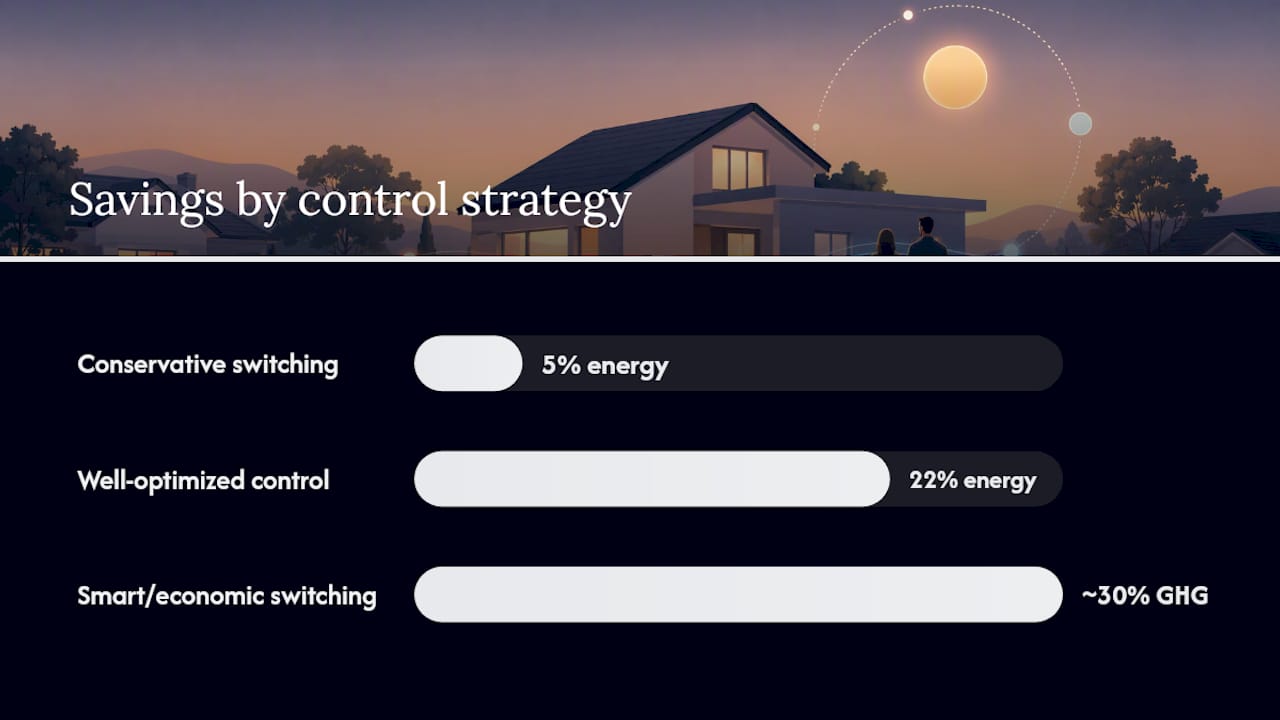
Primary energy savings across simulation studies range from 5% to 22%, as documented in the MDPI Energies review. The lower end of that range reflects systems with conservative switching logic or cold climates where the furnace runs frequently. The upper end reflects well-optimized systems in mixed climates where the heat pump covers the majority of heating hours.
Field monitoring results from NRCan provide the most compelling homeowner-facing evidence: real houses with smart switching controls achieved approximately 30% lower greenhouse gas emissions over a full heating season compared with gas furnace operation alone.
System-level and policy modeling adds a grid perspective. The IOPscience analysis found that hybrid heat pumps can avoid the extreme marginal abatement costs associated with fully electrifying peak heating loads in cold regions, making them a cost-effective transitional technology in policy scenarios where full electrification of peak demand would require massive grid upgrades.
What the literature consistently shows:
- Control strategy and heat pump sizing matter more than brand or minor hardware differences.
- Economic switching modes (using price signals) can optimize for cost rather than energy, which may produce different outcomes than pure efficiency optimization.
- Climate and local energy prices are the two external variables with the greatest influence on realized savings.
- Adding a thermal buffer tank to hydronic systems can reduce heat pump cycling and enable better economic scheduling by shifting heat production into lower-cost hours.
Limitations of the research: Most simulation studies use idealized control assumptions. Real-world results depend on installer commissioning quality, homeowner thermostat behavior, and actual weather patterns. Field studies are fewer in number than simulations, and most come from Canadian or European climates, so direct translation to U.S. conditions requires some judgment.
How Kcaircontrol evaluates whether a hybrid is the right solution for your home
When a homeowner asks whether a hybrid heat pump makes sense, the honest answer starts with a load check, not a product recommendation. The evaluation process matters as much as the equipment choice.
A thorough assessment covers four areas. First, the home’s heating and cooling load — calculated through a Manual J analysis — establishes what the system actually needs to deliver. Second, existing equipment inventory determines whether the current furnace or boiler is worth retaining as the backup component or whether replacement makes more sense. Third, local electricity and gas tariffs are reviewed to model switching economics under real price conditions, not national averages. Fourth, the homeowner’s priorities — whether the primary goal is lower bills, lower emissions, or both — shape the control strategy recommendation.
What experienced installers watch for that homeowners often miss: duct leakage is a silent efficiency killer that undermines heat pump performance before the system ever runs a full season. Thermostat and controls compatibility is another common gap — not every smart thermostat supports dual-fuel switching logic, and using the wrong controller can default the system to furnace-only operation. Balance point behavior in the specific climate zone also needs verification against the equipment’s published performance curves, not a generic industry default.
Industry practitioners consistently note that hybrids are a pragmatic path for contractors and homeowners alike: they reduce emissions compared with furnace-only operation while preserving the reliability that homeowners expect from a proven backup system.
The service commitment that protects your investment includes proper commissioning, documented control programming, and a follow-up performance check after the first heating season to validate that the switching logic is delivering the projected savings.
Kcaircontrol helps you evaluate, install, and finance a hybrid system
Deciding whether a hybrid heat pump is right for your home takes more than reading about it. You need someone who can look at your actual ductwork, your current equipment, and your local energy rates, and give you a straight answer.

Kcaircontrol provides in-home assessments that include a Manual J load calculation, ductwork evaluation, and a control-strategy recommendation tailored to your home’s profile and your energy goals. With over 70 years of HVAC experience serving Kansas City homeowners, the team understands how mixed-climate winters affect hybrid system performance and how to program switching logic that actually delivers the savings the technology promises. If your furnace is part of the hybrid equation, furnace repair and maintenance services are part of the same relationship, so your backup system stays reliable season after season. Flexible financing options are available to help manage the upfront investment, and current special offers may reduce your net cost further. To get started, schedule an assessment online and have your last 12 months of gas and electric bills ready — that data lets the team model your actual payback, not a generic estimate.
Sources
The findings in this article draw on the following primary sources. Each is worth reviewing if you want to go deeper on a specific aspect of hybrid system performance.
- Analysis of the Influence of Control Strategy and Heating Loads on the Performance of Hybrid Heat Pump Systems for Residential Buildings
- The future of home heating: Hybrid home heating systems offer energy savings and reduce GHG emissions – Natural Resources Canada
- Hybrid heat pumps avoid extreme marginal abatement costs of electrifying peak heating loads in cold regions – IOPscience