

TL;DR:
- Upgrading to a higher SEER2 system can save homeowners $400 to $550 annually on energy bills.
- Full AC replacement is recommended when the system is over 12-15 years old or costs more than half the price of a new unit.
- Proper installation and selecting the right size and efficiency are crucial for comfort and long-term savings.
Most Kansas City homeowners only think about replacing their AC when it stops working entirely. But waiting for a full breakdown could be costing you hundreds of dollars every year. Upgrading from 10 to 16 SEER2 can save you $400 to $550 annually on energy bills. SEER2 (Seasonal Energy Efficiency Ratio 2) is the updated federal standard for measuring how efficiently an AC system cools your home. This guide walks you through what AC system replacement actually involves, the signs that your system is ready for an upgrade, how to choose the right unit for Kansas City’s climate, and what to expect from the process start to finish.
Table of Contents
- What does AC system replacement actually mean?
- When should you consider replacing your AC system in Kansas City?
- How to choose the right AC system for Kansas City homes
- What to expect during AC system replacement
- Our Kansas City homeowner perspective: what experts wish someone told them
- Get expert AC replacement support in Kansas City
- Frequently asked questions
Explore AC Replacement Topics for Kansas City Homeowners
| Point | Details |
|---|---|
| Replacement increases efficiency | Upgrading your AC system can significantly reduce energy bills and improve home comfort. |
| SEER2 ratings matter | Choosing a unit with 15-17 SEER2 is best for Kansas City’s mixed climate and maximizes energy savings. |
| Know the right time | Replace your AC if it’s over 12-15 years old, needs frequent repairs, or uses outdated refrigerants. |
| Plan for installation | Understanding the replacement process and preparing your home can ensure smooth, efficient installation. |
| Expert advice pays off | Consulting pros and comparing system options leads to better long-term outcomes and comfort. |
What does AC system replacement actually mean?
AC system replacement means removing your existing cooling equipment and installing a newer, more efficient model in its place. It is not the same as a simple repair. Repairs fix individual components, like a failed capacitor or a refrigerant leak. Replacement addresses the system as a whole, especially when age, recurring failures, or poor efficiency make ongoing repairs a losing investment.
There are three levels of service homeowners often encounter:
- AC repair: Fixing a specific part or issue while keeping the existing system running.
- Partial replacement: Swapping out a major component, such as the outdoor condenser unit, while keeping compatible parts.
- Full system replacement: Removing and replacing the entire system, including the air handler or furnace coil, for maximum efficiency and reliability.
Full replacement makes the most sense in several situations. If your system is more than 12 to 15 years old, repair costs are climbing, or your energy bills keep rising without explanation, those are clear signals. Reviewing common HVAC problems can help you recognize when repairs are no longer the right answer.
One important number to keep in mind: upgrading from 10 to 16 SEER2 saves $400 to $550 per year. Over time, that adds up quickly and often makes replacement the smarter financial decision compared to patching an aging unit.
If you are unsure where your system stands, checking signs you need HVAC repair gives you a practical starting point before calling a technician.
Pro Tip: Consider replacement if your system is over 12 to 15 years old or if repair costs would exceed half the price of a new unit. That rule of thumb saves a lot of homeowners from throwing good money after bad.
When should you consider replacing your AC system in Kansas City?
Kansas City summers are hot and humid, and winters can be surprisingly harsh. That combination puts real stress on residential AC systems year after year. Knowing when to stop repairing and start replacing can protect your comfort and your budget.
Here are the most common signs your AC is ready for an upgrade:
- Frequent repairs: If you have called for service two or more times in a single season, the system is likely failing.
- Rising energy bills: An aging system works harder to deliver the same cooling, which drives up costs.
- Uneven cooling: Hot spots in certain rooms often mean the system can no longer distribute air properly.
- Outdated refrigerant: Systems using R-22 refrigerant are increasingly expensive to service because R-22 has been phased out of production.
- Age over 15 years: Most AC systems have a useful life of 15 to 20 years under normal conditions.
Kansas City’s mixed climate means your AC runs hard from late spring through early fall. Kansas City benefits from AC systems rated 15 to 17 SEER2 due to this demanding seasonal pattern. A higher SEER2 rating means the system uses less energy to produce the same amount of cooling, which matters a great deal when you are running the unit for months at a stretch.
You can also use the identifying HVAC issues guide to walk through a self-assessment before scheduling a professional evaluation. Pairing that with a current HVAC maintenance checklist helps you stay ahead of problems before they become urgent.
“Replacing an old AC system with a higher SEER2 unit can cut cooling bills by up to 35% in KC.” — HVAC industry expert guidance for Kansas City homeowners
Pro Tip: If your system uses R-22 refrigerant, replacement is often the most cost-effective path forward. Sourcing R-22 for repairs has become difficult and expensive since the federal phase-out took effect.
How to choose the right AC system for Kansas City homes
Once you decide to replace your AC, choosing the right system is the next critical step. The wrong size or efficiency rating can leave you uncomfortable and overpaying for years.
Here is a straightforward comparison of older versus newer AC systems:
| Feature | Old system (10 SEER) | New system (16 SEER2) |
|---|---|---|
| Annual energy cost | Higher by $400 to $550 | Lower, more predictable |
| Payback period | N/A | 5 to 9 years |
| Refrigerant type | Often R-22 (phased out) | R-410A or R-454B |
| Smart features | Rarely included | Common (Wi-Fi thermostats, variable speed) |
| Warranty | Likely expired | Typically 10 years parts |
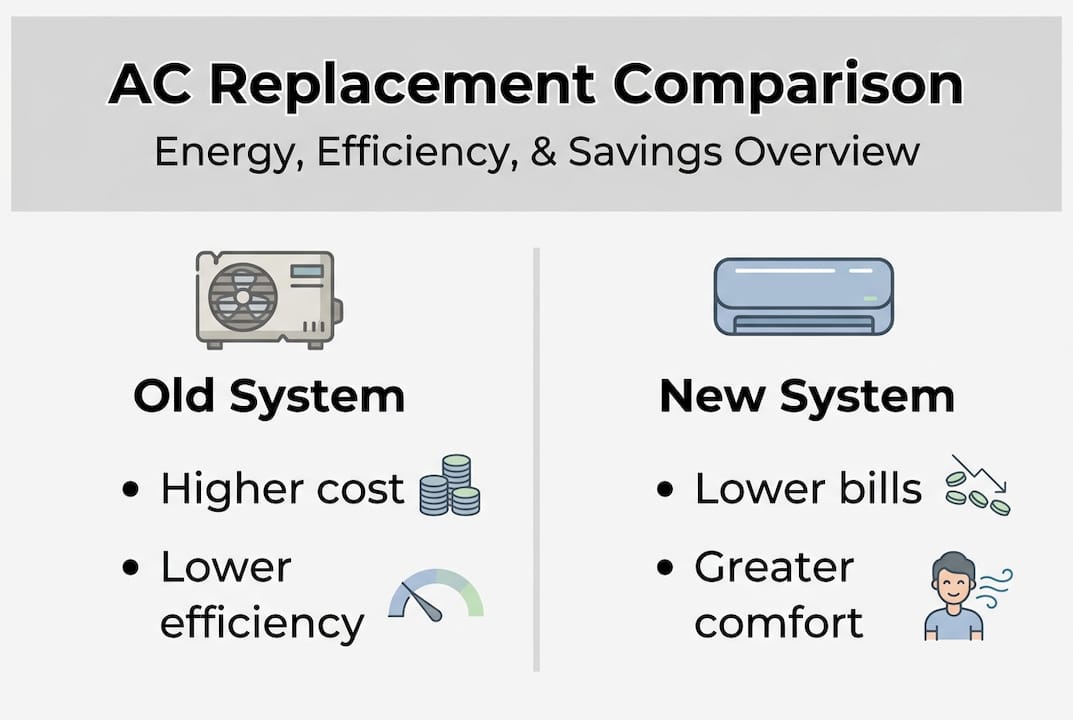
The federal minimum SEER2 is approximately 14, but Kansas City homeowners benefit most from systems rated 15 to 17. That extra efficiency pays off faster here because of the long cooling season.
Follow these steps when selecting a new system:
- Assess your home’s size and layout. A licensed technician performs a load calculation to determine the correct tonnage (cooling capacity) for your square footage.
- Set a realistic budget. Factor in both the upfront cost and long-term energy savings when comparing models.
- Research SEER2 ratings. Higher ratings cost more upfront but deliver lower monthly bills.
- Review available features. Variable-speed compressors, smart thermostat compatibility, and two-stage cooling all improve comfort and efficiency.
- Work with a licensed installer. Improper installation can reduce efficiency by up to 30%, even with a top-rated unit.
For more guidance on matching a system to your home, the choosing the right HVAC system resource walks through the decision in detail. If you want to compare costs before committing, getting HVAC estimates explains what to expect from the quoting process. And for installation best practices, energy efficient HVAC installation covers what a quality install looks like from start to finish.
What to expect during AC system replacement
Knowing what happens on installation day removes a lot of anxiety. The process is organized, and a professional crew handles the heavy lifting from start to finish.
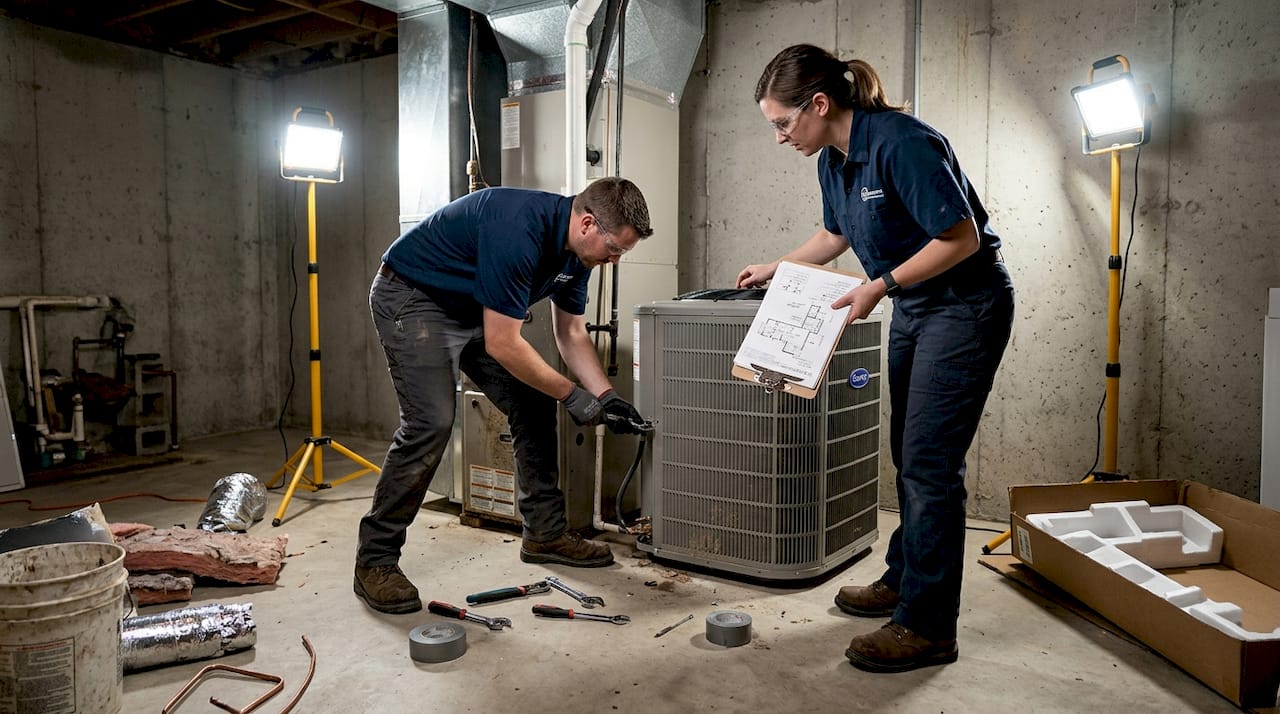
Here is a typical timeline and cost breakdown for Kansas City homeowners:
| Stage | Details |
|---|---|
| Evaluation and estimate | 1 to 2 hours on-site assessment |
| Equipment lead time | 1 to 5 business days depending on model |
| Installation day | 4 to 8 hours for most standard systems |
| Total project cost | $4,500 to $8,000 depending on size and efficiency |
| Warranty | 10 years parts, 1 to 2 years labor (varies by contractor) |
| Annual savings | $400 to $550 compared to a 10 SEER system |
The typical payback period for upgrading AC systems is 5 to 9 years, which means most homeowners recoup their investment well within the system’s lifespan. After payback, the savings are pure benefit.
To prepare your home before installation day, follow these steps:
- Clear the area around your indoor and outdoor units so technicians have easy access.
- Secure pets in a separate room to keep them safe and out of the work area.
- Plan for a few hours without cooling during the switchover, especially important on hot days.
- Confirm your thermostat compatibility with the new system ahead of time.
- Ask about post-install maintenance so you know what filter changes and checkups are needed.
After installation, schedule your first maintenance visit within the first year. Staying current with scheduling HVAC inspections protects your warranty and keeps the system running at peak efficiency for years to come.
Our Kansas City homeowner perspective: what experts wish someone told them
After working with Kansas City homeowners for over 70 years, we have seen the same pattern repeat. Most people wait too long. They tolerate rising bills, uneven cooling, and one repair after another because replacement feels like a big commitment. By the time they finally upgrade, they realize they could have been saving money and living more comfortably years earlier.
The real lesson is this: a higher SEER2 system is not just about efficiency on paper. It is about consistent comfort during Kansas City’s brutal July heat and lower bills every single month. Upgrading from 10 SEER to 16 SEER2 can pay for itself in 5 to 9 years with annual savings of $400 to $550. That math is hard to argue with.
The pitfalls we see most often are over-sizing (bigger is not always better), cutting corners on installation, and skipping the post-install walk-through. Always insist on professional HVAC installation from a licensed contractor who will size the system correctly and explain how to operate and maintain it.
Pro Tip: Before the installer leaves, ask for a full walk-through of your new system’s controls, filter location, and recommended maintenance schedule. That 15-minute conversation can add years to your system’s life.
Get expert AC replacement support in Kansas City
You now have the knowledge to make a confident decision about your home’s cooling system. The next step is connecting with a trusted local team that can evaluate your current setup and recommend the right path forward.
At KC Air Control, we have been serving Kansas City homeowners for over 70 years with reliable, high-quality HVAC solutions. Whether you need a quick diagnosis on an aging unit or are ready to schedule a full replacement, we make the process straightforward and stress-free. If your system needs urgent attention, our emergency HVAC repair workflow gets you back to comfortable fast. Ready to explore your options? Start with choosing your new HVAC system or browse our AC repair services to find the right fit for your home and budget.
Frequently asked questions
How much does AC system replacement typically cost in Kansas City?
Most Kansas City homeowners pay between $4,500 and $8,000, depending on system size and efficiency. The payback period is typically 5 to 9 years based on annual energy savings.
How long does AC replacement take?
A standard AC system replacement typically takes one full day, though larger or more complex jobs may extend to two days. Planning ahead and clearing access to your equipment speeds up the process.
What efficiency rating should I look for in Kansas City?
A SEER2 rating between 15 and 17 is ideal for Kansas City’s mixed climate, balancing upfront cost with long-term savings.
Is AC system replacement disruptive to daily life?
Most replacements cause minimal disruption, with professional installers completing the job in a single day and handling all cleanup before they leave.
Can I save money by upgrading my AC instead of repairing it?
Yes. Upgrading from 10 to 16 SEER2 saves $400 to $550 each year on energy bills, making replacement a smart long-term investment for most Kansas City homeowners.
Recommended
- Energy efficient HVAC installation guide for KC homeowners – KC Air Control – Heating & Cooling
- How to choose the right HVAC system for your KC home – KC Air Control – Heating & Cooling
- Why upgrade your HVAC? Boost comfort & cut energy bills – KC Air Control – Heating & Cooling
- HVAC estimates in Kansas City: 2026 homeowner guide – KC Air Control – Heating & Cooling