
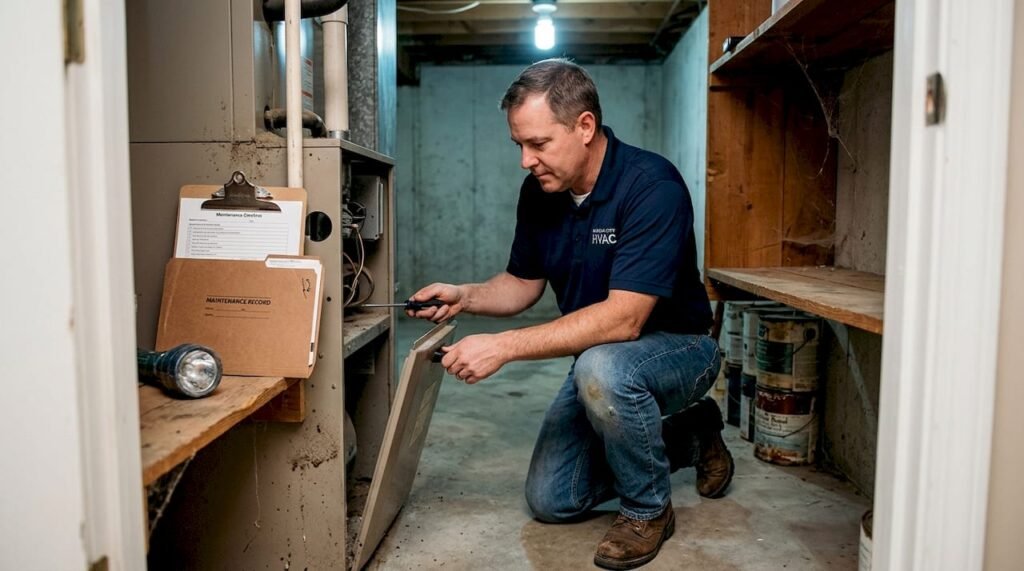
When your furnace quits on the coldest night of winter or your air conditioner fails during a July heat wave, the repair bill isn’t just expensive, it’s an emergency. Many Kansas City homeowners face these crises because they skip regular HVAC inspections, letting small issues grow into major breakdowns. Preventative maintenance extends HVAC lifespan from 10 to 15 years up to 15 to 20 plus years while cutting energy bills by 5 to 20 percent. This guide walks you through everything you need to know about scheduling effective HVAC inspections, from preparation to execution, so you can keep your home comfortable year round and avoid costly surprises.
Table of Contents
- Key takeaways
- Preparing for your HVAC inspection: what you need to know
- Step by step guide to scheduling your HVAC inspection in Kansas City
- Common mistakes to avoid and what to expect from your HVAC inspection
- Keep your Kansas City home comfortable with expert HVAC inspections
- Frequently asked questions
Guide Contents: Scheduling HVAC Inspections in Kansas City
| Point | Details |
|---|---|
| Biannual inspections | Industry experts recommend two inspections per year, one before the cooling season and one before the heating season to catch problems early. |
| Preparation matters | Knowing your system type, gathering maintenance records, and confirming access helps technicians diagnose and service efficiently. |
| Ensure access | Clear space around the outdoor unit, indoor components, and vents so technicians can inspect and perform maintenance safely. |
| Warranty awareness | Review warranty and service contract terms since some require annual inspections to keep coverage valid and may reduce out of pocket costs. |
| Track results | Keep notes on issues and energy usage to spot recurring problems and guide future maintenance decisions. |
Preparing for your HVAC inspection: what you need to know
Successful HVAC inspections start long before a technician arrives at your door. Proper preparation ensures you get maximum value from every service visit and helps technicians diagnose issues quickly and accurately.
Knowing your HVAC system type is the first critical step. Central air conditioning systems, heat pumps, and furnaces each require different inspection approaches and maintenance schedules. If you’re unsure what equipment you have, check the labels on your outdoor condenser unit and indoor air handler or furnace. This information helps you communicate clearly when scheduling HVAC maintenance and ensures technicians bring the right tools and replacement parts.
Inspection frequency matters more than most homeowners realize. Industry experts recommend biannual inspections, one in spring before cooling season and another in fall before heating season begins. This timing catches potential problems before you rely heavily on your system during extreme weather. Kansas City’s temperature swings make this schedule especially important, as equipment works harder during hot summers and cold winters.
Gathering your maintenance records before scheduling helps technicians understand your system’s history. Pull together any documentation from previous inspections, repairs, or installations. Note any irregular issues you’ve noticed, such as rooms that stay too hot or cold, unusual noises, or higher than normal energy bills. These observations give technicians valuable clues about where to focus their diagnostic efforts.
System accessibility can make or break an inspection appointment. Walk through your home and locate all HVAC components, including the outdoor condenser unit, indoor air handler or furnace, thermostat, and air return vents. Clear away any storage boxes, landscaping, or debris blocking access to equipment. Technicians need several feet of clearance around units to perform thorough inspections and safely complete maintenance tasks.
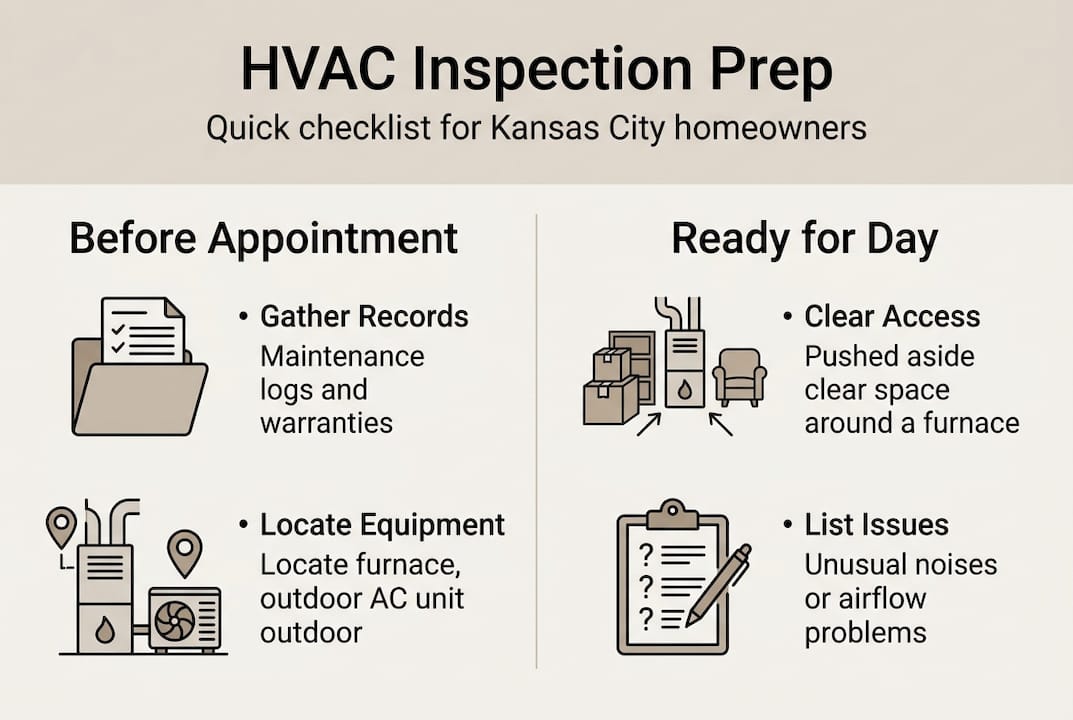
Warranty and service contract details often include inspection requirements or coverage. Review your equipment warranty documents and any maintenance agreements you’ve purchased. Some manufacturers require annual professional inspections to keep warranties valid, while service contracts may include scheduled maintenance visits. Understanding these details helps you avoid accidentally voiding coverage and may reduce your out of pocket costs for inspections.
Pro Tip: Take photos of your equipment model and serial number plates before calling to schedule. Having this information readily available speeds up the booking process and helps providers give you accurate service quotes.
When you understand how to install HVAC systems and their components, you’ll communicate more effectively with technicians and make better decisions about maintenance recommendations.
Step by step guide to scheduling your HVAC inspection in Kansas City
Once you’ve prepared the groundwork, following a systematic approach to scheduling ensures you get quality service at the right time. This process involves choosing the right provider, timing your appointment strategically, and setting clear expectations.

Step 1: Research and select certified local HVAC technicians. Look for companies with proper licensing, insurance, and experience serving Kansas City’s specific climate challenges. Check online reviews focusing on inspection quality and customer service. Verify that technicians hold NATE certification or similar professional credentials that demonstrate technical expertise.
Step 2: Compare service offerings and pricing. Not all HVAC inspections cover the same items. Request detailed information about what each provider includes in their standard inspection. Some companies offer basic visual checks while others perform comprehensive diagnostics with advanced testing equipment. Understanding these differences helps you compare value, not just price.
Step 3: Schedule ahead of seasonal transitions. Book your spring cooling system inspection in March or April, before temperatures climb and service calendars fill up. Schedule fall heating system checks in September or October, well before the first freeze. Early scheduling often means more flexible appointment times and faster service.
Step 4: Confirm inspection scope and documentation. When booking, ask specifically what the technician will check and how they’ll document findings. Quality inspections should include temperature differential measurements of 14 to 22 degrees Fahrenheit for air conditioning systems, coil cleanliness assessment, refrigerant level checks, and electrical component testing. Request written reports with photos of any issues discovered.
Step 5: Prepare your symptom checklist. Write down every performance issue you’ve noticed, no matter how minor it seems. Include details like which rooms have temperature problems, when strange noises occur, and how long issues have persisted. This information helps technicians prioritize their diagnostic work during the limited appointment time.
Step 6: Block adequate time for the appointment. Standard HVAC inspections typically take 60 to 90 minutes for thorough evaluation. Don’t schedule back to back appointments that might rush the technician. Being present during the inspection lets you ask questions and understand recommendations firsthand.
Pro Tip: Ask providers if they offer maintenance plans that bundle inspections with priority scheduling and discounted repairs. These programs often deliver better value than paying for individual service calls throughout the year.
Use this comparison framework to evaluate HVAC service providers:
| Evaluation Factor | What to Look For | Why It Matters |
|---|---|---|
| Certifications | NATE, EPA 608, manufacturer training | Ensures technical competence |
| Service scope | Detailed inspection checklist provided | Prevents surprise limitations |
| Documentation | Written reports with photos and measurements | Creates maintenance history |
| Scheduling flexibility | Online booking, evening and weekend availability | Fits your schedule |
| Response time | Same day or next day emergency service | Protects you if inspection reveals urgent issues |
| Pricing transparency | Clear breakdown of inspection and repair costs | Avoids hidden fees |
The Kansas City HVAC inspections guide provides additional local considerations for timing and service selection. Following seasonal HVAC maintenance steps between professional inspections extends the benefits of each service visit.
Common mistakes to avoid and what to expect from your HVAC inspection
Even with careful planning, homeowners often stumble into preventable pitfalls that reduce inspection effectiveness. Understanding these mistakes and knowing what quality service looks like protects your investment and ensures you get actionable results.
Scheduling inspections too late ranks as the most common and costly error. Waiting until your system shows obvious problems or calling for spring AC service in June means you’ve already lost efficiency and may face longer wait times for appointments. By the time performance degrades noticeably, underlying issues have often progressed beyond simple preventative fixes. Early scheduling catches problems while they’re still minor and inexpensive to address.
Neglecting system access preparation wastes valuable appointment time. Technicians who spend 20 minutes moving storage items or trimming overgrown bushes have less time for actual inspection work. Locked gates, aggressive pets, and unclear directions to equipment locations create unnecessary delays. Take a walk around your property the day before your appointment to ensure clear, safe access to all HVAC components.
Ignoring early warning signs between scheduled inspections compounds problems unnecessarily. Strange noises, weak airflow, frequent cycling, and inconsistent temperatures all signal developing issues that warrant immediate attention. Homeowners who dismiss these symptoms as minor annoyances often face major repairs that could have been prevented with timely intervention. Trust your instincts when something seems off with your system’s performance.
During a professional inspection, expect technicians to measure and document specific performance metrics. Temperature differentials and coil conditions serve as primary diagnostic indicators. For air conditioning systems, the temperature difference between supply and return air should fall between 14 and 22 degrees Fahrenheit. Lower differentials may indicate refrigerant leaks or compressor problems, while higher readings can signal restricted airflow or oversized equipment. Dirty coils reduce heat transfer efficiency and force systems to work harder, increasing energy consumption and wear.
Quality inspections typically result in one of three outcomes. First, your system may receive a clean bill of health with recommendations for continued routine maintenance. Second, technicians might identify minor issues requiring immediate attention, such as replacing worn belts, cleaning coils, or adjusting refrigerant levels. Third, inspections sometimes reveal significant problems needing major repairs or system replacement. While the last scenario feels disappointing, discovering these issues during planned maintenance beats facing emergency breakdowns during extreme weather.
“Inspections identify red flags such as low temperature differentials and dirty coils that could indicate compressor or refrigerant issues early, preventing catastrophic failures that leave homeowners without heating or cooling when they need it most.”
Recognizing emergency repair signs helps you act quickly when inspections reveal urgent problems:
- Complete system failure with no heating or cooling output
- Burning smells or visible smoke from HVAC equipment
- Loud grinding, squealing, or banging noises indicating mechanical failure
- Refrigerant leaks creating ice buildup or hissing sounds
- Electrical issues like tripped breakers or sparking components
- Carbon monoxide detector alarms near furnace or heating equipment
Maintaining organized records of inspection reports creates valuable documentation for future service needs and warranty claims. Store reports digitally and physically, noting dates, findings, and completed repairs. This history helps new technicians understand your system’s maintenance background and proves compliance with warranty inspection requirements. When selling your home, comprehensive maintenance records demonstrate responsible ownership and may increase property value.
Understanding signs you need HVAC repair helps you distinguish between normal operation and problems requiring professional attention. Learning about HVAC maintenance benefits reinforces why consistent inspections deliver long term value beyond immediate repairs.
Keep your Kansas City home comfortable with expert HVAC inspections
Now that you understand how to prepare for and schedule effective HVAC inspections, taking action becomes the natural next step. KC Air Control provides expert inspection services specifically designed for Kansas City homeowners who want to prevent emergency breakdowns and maintain peak system efficiency.
Our certified technicians bring over 70 years of combined experience to every Kansas City HVAC inspection, using advanced diagnostic tools to measure temperature differentials, assess coil conditions, and identify potential problems before they escalate. We document every finding with detailed reports and photos, giving you clear information to make informed maintenance decisions.
Scheduling your inspection couldn’t be easier. Book your HVAC inspection online at your convenience, choosing appointment times that fit your schedule including evenings and weekends. Our streamlined process means less hassle for you and faster service when you need it most. When inspections reveal urgent repairs, our emergency HVAC repair workflow ensures rapid response to restore your home comfort quickly.
Frequently asked questions
How often should I schedule HVAC inspections for my Kansas City home?
Schedule HVAC inspections twice yearly, once in spring before cooling season and once in fall before heating season begins. This biannual approach catches potential problems before you rely heavily on your system during extreme temperatures. Kansas City’s climate swings make this timing especially important, as equipment faces significant stress during hot summers and cold winters. Following seasonal HVAC maintenance steps between professional visits extends the benefits of each inspection.
What should I prepare before my HVAC inspection appointment?
Gather your system’s maintenance records, note any performance issues you’ve observed, and ensure clear access to all equipment including outdoor units and indoor components. Know your system type, such as central AC, heat pump, or furnace, and have model and serial numbers available. Review your warranty and service contract details to understand coverage and requirements. Taking these preparation steps helps technicians work efficiently and provide more accurate diagnostics during your scheduled appointment time.
What should I expect during an HVAC inspection?
Expect technicians to check system airflow, measure temperature differentials between supply and return air, and inspect coil cleanliness as primary diagnostic indicators. For air conditioning systems, temperature differentials should measure 14 to 22 degrees Fahrenheit, with deviations signaling potential compressor or refrigerant issues. Technicians also examine electrical connections, test safety controls, check refrigerant levels, and assess overall equipment condition. Quality inspections include written documentation with photos of any discovered issues and clear recommendations for maintenance or repairs.
How do HVAC inspections save me money?
Regular inspections improve system efficiency, reducing energy consumption by 5 to 20 percent and lowering your monthly utility bills. Preventative maintenance reduces breakdowns by up to 70 percent, helping you avoid expensive emergency repair calls that often cost two to three times more than planned maintenance. Early detection of minor issues prevents them from escalating into major component failures requiring costly replacements. Studies show preventative maintenance delivers 545 percent return on investment through combined energy savings and avoided repair costs.
Can I schedule HVAC inspections online in Kansas City?
Yes, many local providers including KC Air Control offer convenient online scheduling that lets you book HVAC inspections 24 hours a day from any device. Online booking eliminates phone tag, provides instant confirmation, and often includes more flexible appointment time options than traditional scheduling methods. Digital scheduling also helps you plan ahead for seasonal maintenance, ensuring you secure preferred appointment times before service calendars fill during peak heating and cooling seasons.
What warning signs suggest I should schedule an inspection sooner than planned?
Inconsistent room temperatures, weak airflow from vents, strange noises like grinding or squealing, frequent system cycling, and unexplained increases in energy bills all indicate developing problems requiring prompt attention. Other red flags include moisture or ice accumulation around equipment, burning smells, and difficulty maintaining set thermostat temperatures. Don’t wait for your scheduled biannual inspection if you notice these symptoms, as early intervention prevents minor issues from becoming major failures that leave you without heating or cooling during extreme weather.
Recommended
- HVAC inspections for Kansas City homeowners: 2026 guide – KC Air Control – Heating & Cooling
- Optimize your HVAC maintenance workflow for KC homes – KC Air Control – Heating & Cooling
- Why seasonal HVAC checkups matter for Kansas City homes – KC Air Control – Heating & Cooling
- Seasonal HVAC Maintenance Steps for Home Energy Savings – Air Control
- How to Request Structural Inspection for Texas Homes – Texas Licensed Engineers