
You might assume that installing a bigger HVAC system means better comfort, but this common belief creates problems that cost homeowners thousands in wasted energy and repairs. Professional installation ensures your heating and cooling equipment is correctly sized, efficiently configured, and reliably performs for Kansas City’s demanding climate. This guide reveals why investing in expert HVAC installation protects your comfort, your wallet, and your home’s long-term value.
Table of Contents
- How Professional HVAC Installation Impacts System Efficiency
- The Critical Role Of Correct HVAC Sizing For Kansas City Homes
- Common Pitfalls Of DIY Or Substandard HVAC Installation And Their Consequences
- How Professional Installation Ensures Safety, Warranty, And Long-Term Savings
- Get Expert HVAC Installation In Kansas City With Air Control
- FAQ
Your Complete Guide to Professional HVAC Installation in Kansas City
| Point | Details |
|---|---|
| Efficiency boost | Professional HVAC installation improves system efficiency by up to 20%, directly cutting your energy bills. |
| Sizing accuracy | Over 50% of systems suffer from incorrect sizing, leading to wasted energy and premature component failure. |
| Extended lifespan | Proper installation adds 5 to 7 years to your HVAC system’s operational life by preventing avoidable breakdowns. |
| Code compliance | Meeting local Kansas City codes ensures safety from hazards like carbon monoxide and protects your warranty. |
| Climate precision | Kansas City’s extreme seasonal swings demand precise load calculations to avoid costly comfort issues. |
How professional HVAC installation impacts system efficiency
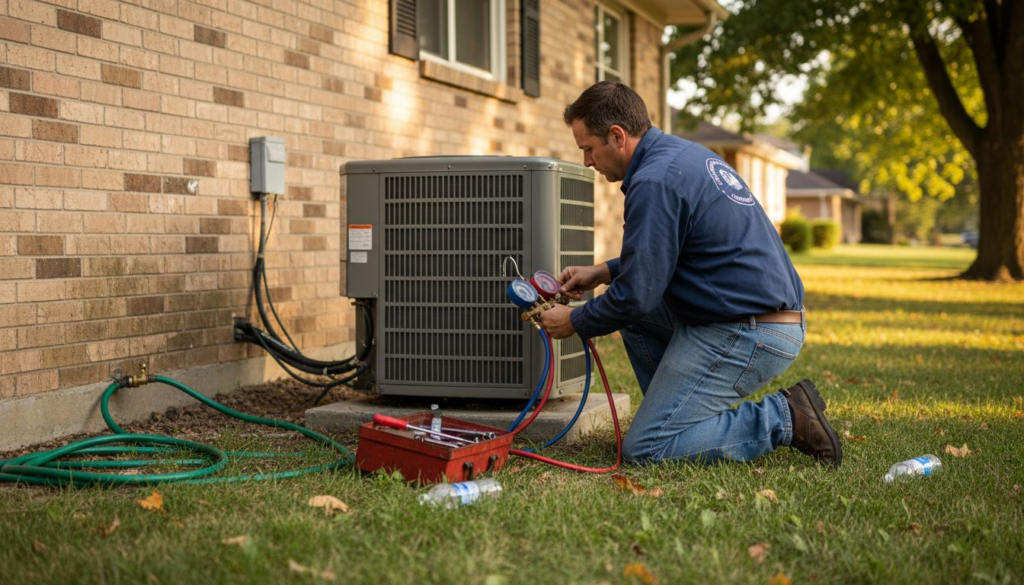
When you hire a certified HVAC technician, you get more than someone who connects pipes and wires. Professional installers ensure correct refrigerant charge and verify ductwork integrity, preventing the energy losses that plague amateur installations. These details matter because improperly installed systems lose up to 30% of their efficiency, turning your climate control investment into a monthly drain on your budget.
Efficiency gains from professional installation reach 20% in well-executed projects, translating to substantial utility savings for Kansas City homeowners facing hot summers and frigid winters. Your system runs fewer cycles, uses less electricity or gas, and maintains consistent temperatures without the constant adjustments typical of poorly installed equipment. Poor installation creates common failures like refrigerant leaks, blocked airflow from kinked ducts, and misaligned components that force your HVAC to work harder than designed.
Expert installers optimize every aspect of system setup, tailoring configurations to your home’s unique structure, insulation levels, window placement, and Kansas City’s climate patterns. They account for factors DIY guides ignore, such as attic temperatures, basement humidity, and prevailing wind directions that affect your home’s heating and cooling loads. Regular maintenance complements this foundation, and scheduling an hvac tune-up annually sustains the efficiency your professional installation established.
Pro Tip: Ask your installer to document refrigerant charge levels and airflow measurements at installation, creating a baseline for future service calls that helps technicians quickly diagnose any performance changes.
Key efficiency factors professionals address:
- Refrigerant charge accuracy within manufacturer specifications
- Ductwork sealing and insulation to prevent thermal losses
- Airflow balancing across all rooms for even comfort
- Thermostat placement away from heat sources and drafts
- Electrical connections sized for system demands
The critical role of correct HVAC sizing for Kansas City homes
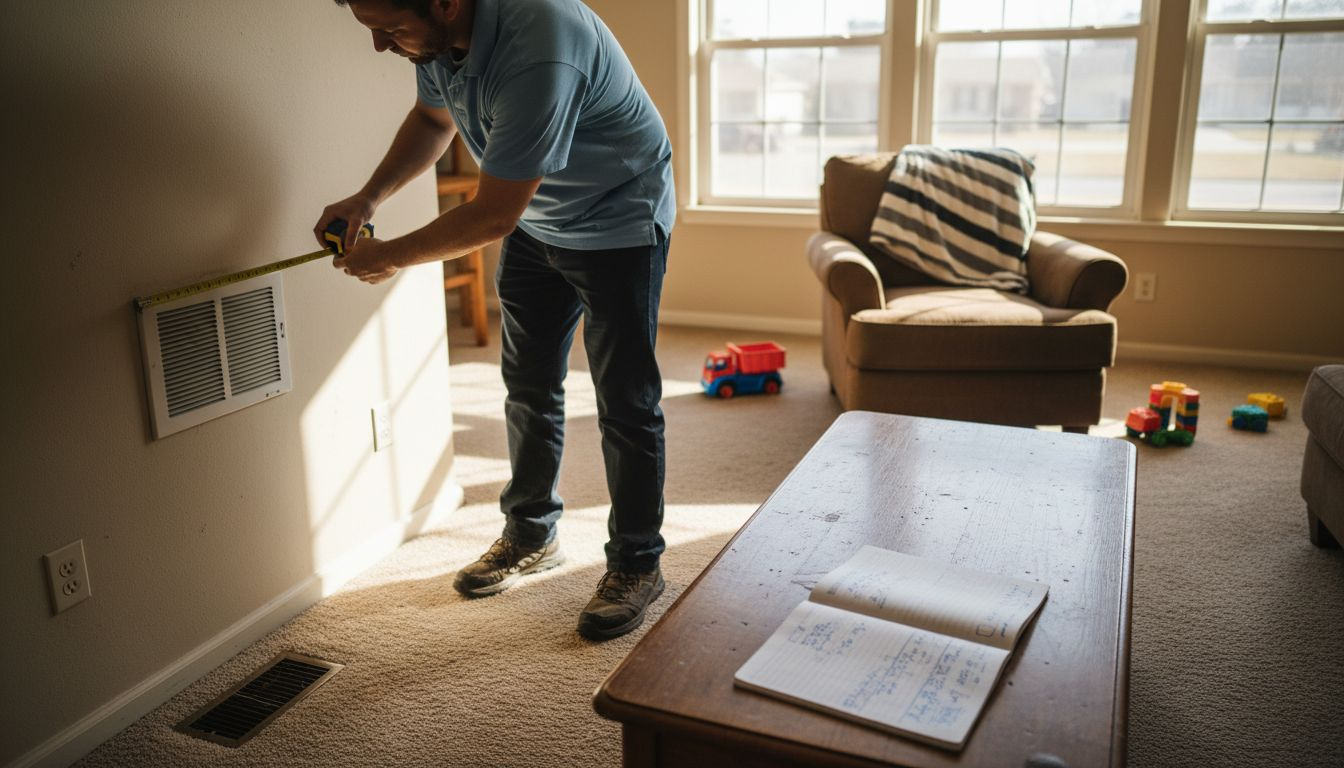
Manual J load calculation stands as the industry standard for determining your home’s precise heating and cooling requirements, accounting for square footage, insulation, windows, orientation, occupancy, and local climate data. Without this calculation, installers resort to guesswork or outdated rules of thumb that lead to oversized or undersized equipment, both causing distinct problems that compromise comfort and increase costs.
Proper sizing prevents short cycling, where oversized systems turn on and off rapidly without completing full heating or cooling cycles, creating temperature swings and wearing out components prematurely. It also avoids undersized systems that run constantly without achieving comfortable temperatures, especially during Kansas City’s temperature extremes. Manual S equipment selection and Manual D duct design complement the load calculation, ensuring your chosen equipment matches calculated needs and ductwork delivers conditioned air efficiently to every room.
Improper sizing affects over 50% of installed HVAC systems, leading to premature failures and operating costs that run 40% higher than properly sized alternatives. Kansas City’s temperature fluctuations, ranging from subzero winter nights to 100°F summer days, make precision in sizing especially critical because your system must handle both extremes without struggling or wasting energy during milder seasons.
Pro Tip: Request a copy of your home’s Manual J calculation report and keep it with your home records, as this document proves invaluable for future replacements, additions, or upgrades that affect your HVAC requirements.
Manual J calculation process:
- Measure all exterior walls, windows, doors, and ceiling areas
- Document insulation levels in walls, attic, and foundation
- Record window types, orientations, and shading factors
- Account for occupancy patterns and internal heat sources
- Apply Kansas City climate data for design temperatures
- Calculate room-by-room heating and cooling loads
- Sum totals to determine whole-house equipment capacity
| System Size Error | Comfort Impact | Energy Waste | Component Wear |
|---|---|---|---|
| 20% Oversized | Humidity problems, cold spots | 15-25% higher bills | Compressor failure in 7-10 years |
| Correctly Sized | Consistent temperatures | Optimal efficiency | 15-20 year lifespan |
| 20% Undersized | Hot/cold rooms, poor humidity control | Constant runtime increases bills 20-30% | Fan motor burnout in 5-8 years |
Scheduling an HVAC inspection before replacement helps identify whether your current system’s sizing matches your home’s actual needs or perpetuates past installation errors.
Common pitfalls of DIY or substandard HVAC installation and their consequences
Incorrect refrigerant charging ranks among the most frequent installation errors, with systems running either undercharged or overcharged, both conditions that decrease performance and spike energy costs while potentially damaging the compressor. Technicians need specialized gauges and knowledge of superheat and subcooling measurements to achieve the precise charge manufacturers specify, not the simple pressure readings amateurs rely on.
Leaky ductwork reduces airflow efficiency by 20 to 30% in typical installations performed without proper sealing methods, forcing your furnace or air conditioner to compensate for lost conditioned air that heats or cools your attic instead of your living spaces. Improper sizing causes the short cycling and inadequate comfort described earlier, problems that compound when installers ignore load calculations in favor of matching old equipment size or using simplified square footage charts.
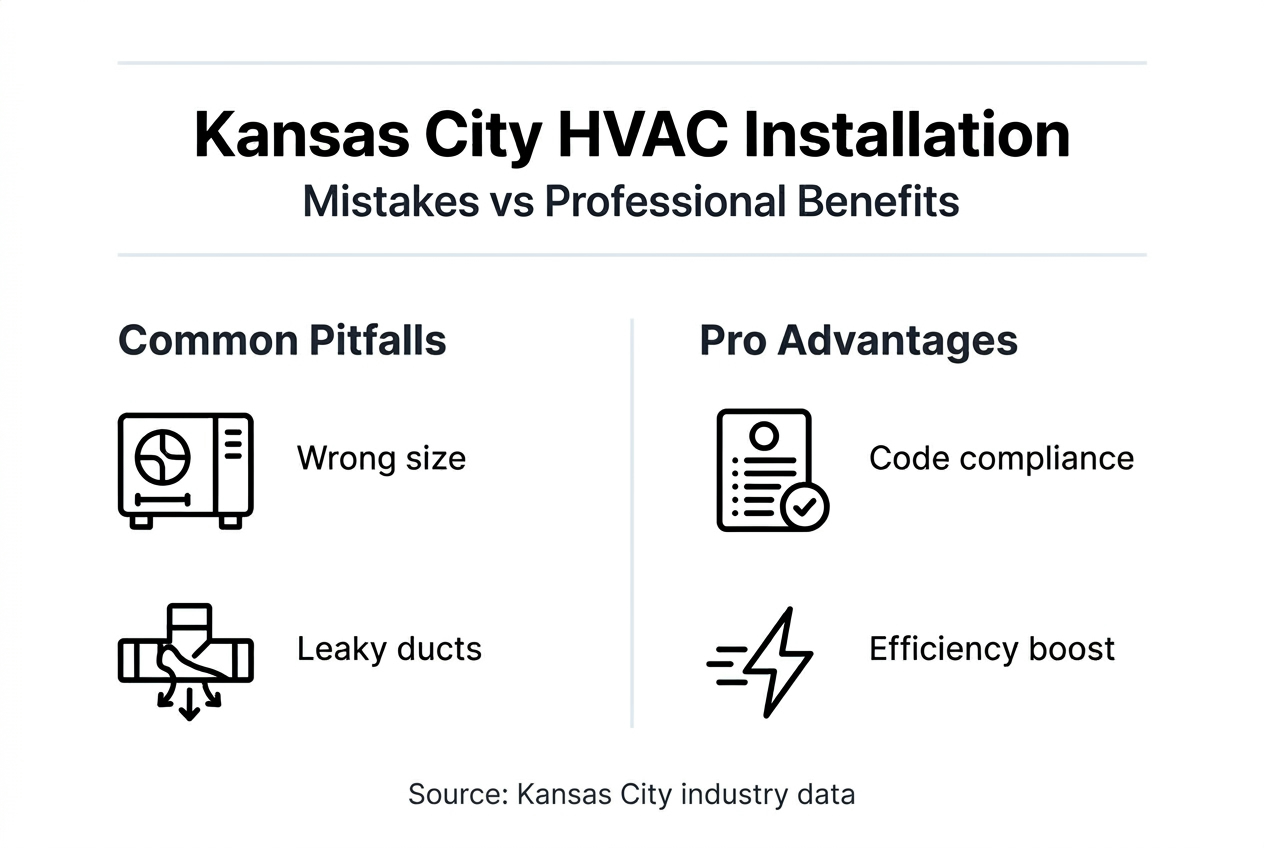
Not following manufacturer specifications and local building codes creates safety hazards ranging from carbon monoxide leaks to electrical fires, while simultaneously voiding equipment warranties that explicitly require professional installation to remain valid. DIY installations increase premature failure rates by up to 40%, turning what seemed like cost savings into expensive repairs or complete system replacement within just a few years.
Common installation failures that cost homeowners:
- Refrigerant lines kinked or inadequately insulated
- Condensate drains sloped incorrectly, causing water damage
- Return air pathways blocked or undersized
- Outdoor units placed where airflow is restricted
- Gas connections improperly sealed or sized
- Electrical disconnects omitted or incorrectly installed
Up to 70% of systems suffer from incorrect refrigerant charge and 30% from ductwork leaks due to poor installation practices, according to Air Conditioning Contractors of America research that highlights how widespread these preventable problems have become.
Avoiding HVAC installation mistakes requires hiring qualified contractors who follow industry standards, not the lowest bidder who cuts corners to offer unrealistic pricing.
How professional installation ensures safety, warranty, and long-term savings
Professional installers ensure installations meet Kansas City and Missouri building codes that exist specifically to prevent hazards like carbon monoxide leaks from cracked heat exchangers, gas leaks from improper connections, and electrical fires from undersized wiring. These codes aren’t bureaucratic obstacles but safety standards developed from decades of identifying failure modes that injure homeowners and damage property.
Following manufacturer guidelines remains essential for keeping equipment warranties valid, as virtually all HVAC manufacturers require professional installation and refuse to honor warranty claims on equipment installed by unlicensed individuals or contractors who deviate from specifications. Correct sizing and installation reduce mechanical strain on components, with properly installed systems lasting 5 to 7 years longer than incorrectly installed alternatives by eliminating the excessive wear from cycling problems and refrigerant issues.
| Factor | DIY/Substandard Installation | Professional Installation |
|---|---|---|
| Safety Compliance | Often ignores codes, risking carbon monoxide and fire hazards | Meets all Kansas City and state codes with inspections |
| Warranty Protection | Voids manufacturer warranty, leaving you liable for all repairs | Maintains full warranty coverage for parts and labor |
| System Lifespan | 8-12 years typical due to premature wear | 15-20 years with proper maintenance |
| Energy Efficiency | 70-80% of rated efficiency due to installation errors | 95-100% of rated efficiency |
| Repair Frequency | Annual repairs common from year 3 onward | Minimal repairs for first 8-10 years |
Investing upfront in professional installation leads to substantial savings over your HVAC system’s life, as you avoid the compounding costs of higher energy bills, frequent repairs, shortened equipment lifespan, and potential safety incidents that amateur installation creates. Kansas City HVAC safety codes exist to protect you, and professional installers ensure compliance while optimizing your system’s performance.
Pro Tip: Always verify your installer holds proper licensing for Kansas City, carries liability insurance, and offers written warranties on both equipment and labor before signing any installation contract.
Get expert HVAC installation in Kansas City with Air Control
Your home deserves heating and cooling that works flawlessly through Kansas City’s temperature extremes, and Air Control delivers professional HVAC services designed specifically for our region’s demanding climate. Our certified technicians perform complete Manual J load calculations, follow all manufacturer specifications, and ensure full compliance with local codes on every installation.

Choosing Air Control means your system achieves maximum efficiency from day one, operates safely throughout its lifespan, and maintains warranty protection that guards your investment. We back our installations with comprehensive service agreements and offer ongoing HVAC inspections that keep your equipment performing at peak levels. When urgent problems arise, our emergency repair workflow gets your comfort restored quickly without compromising quality.
FAQ
What are the most common mistakes in HVAC installation?
Common installation errors include improper system sizing based on guesswork rather than load calculations, incorrect refrigerant charge that reduces efficiency and damages components, ductwork leaks that waste conditioned air, and failure to follow building codes or manufacturer specifications. These mistakes lead to higher energy costs, frequent breakdowns, shortened equipment life, and voided warranties that leave homeowners paying for preventable problems.
How does local climate affect HVAC installation in Kansas City?
Kansas City experiences extreme seasonal temperature swings from subzero winter lows to summer highs exceeding 100°F, requiring precise load calculations that account for both heating and cooling demands. Professional installers use Manual J calculations incorporating local climate data to size systems that handle peak conditions without oversizing that causes humidity problems and efficiency losses during milder weather, ensuring year-round comfort and optimal performance.
Can professional HVAC installation save me money long term?
Professional installation improves system efficiency by up to 20%, directly lowering monthly energy bills while reducing breakdown frequency through proper configuration and component protection. Correctly installed systems last 5 to 7 years longer than improperly installed alternatives, delaying expensive replacement costs and maintaining warranty coverage that amateur installation voids, creating savings that far exceed the initial investment difference over the equipment’s lifespan.
How long does professional HVAC installation typically take?
Most residential HVAC installations require one to three days depending on system complexity, necessary ductwork modifications, and whether you’re replacing existing equipment or installing in new construction. Professional installers take additional time for load calculations, proper refrigerant charging, airflow balancing, and testing that ensures optimal performance, time that amateur installers skip but that proves essential for achieving rated efficiency and reliability.
Do I need permits for HVAC installation in Kansas City?
Yes, Kansas City requires building permits for HVAC installations to ensure work meets safety codes and energy standards, with inspections verifying proper installation before final approval. Professional contractors handle permit applications and coordinate inspections as part of their service, while DIY installations that skip permitting create legal issues when selling your home and void equipment warranties that require code-compliant installation.
Recommended
- Why emergency HVAC service matters for Kansas City homes – KC Air Control – Heating & Cooling
- Regular HVAC Servicing Cuts Kansas City Bills 30% in 2026 – Air Control
- HVAC inspections for Kansas City homeowners: 2026 guide – KC Air Control – Heating & Cooling
- Emergency HVAC Repair Workflow KC: 35% Faster Fixes – Air Control