
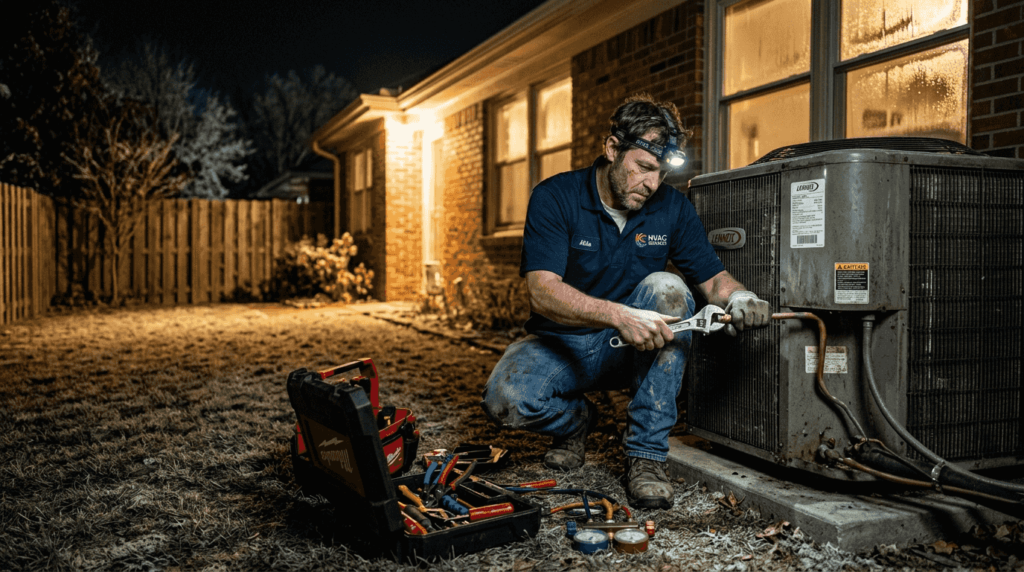
When your HVAC system fails unexpectedly, every hour counts. Delaying emergency repairs increases damage costs by up to 40%, turning what could be a simple fix into an expensive nightmare. This guide explains what qualifies as an emergency HVAC repair, how to recognize warning signs early, and the steps Kansas City homeowners should take to restore comfort and protect their homes quickly.
Table of Contents
- What Is Emergency HVAC Repair?
- Common Causes And Warning Signs Of Emergency HVAC Failures
- Why Timing Matters In Emergency HVAC Repair
- Cost Considerations For Emergency HVAC Repairs
- How Emergency Repairs Differ From Routine HVAC Maintenance
- How To Choose A Reliable Emergency HVAC Repair Service
- What Homeowners Should Do During An HVAC Emergency
- Expert Emergency HVAC Repair Services In Kansas City
- Frequently Asked Questions
Kansas City Emergency HVAC Repair Guide: Quick Links
| Point | Details |
|---|---|
| Emergency HVAC repair requires service within 24 hours | Prevents major damage, discomfort, and escalating health risks from poor air quality. |
| Common emergencies include compressor failure, refrigerant leaks, electrical issues, and furnace breakdowns | These account for 65% of all emergency HVAC service calls in residential properties. |
| Delaying repairs increases costs by up to 40% | Prompt response within 24 hours minimizes secondary damage and keeps repair bills manageable. |
| Emergency repairs cost 20-30% more than routine fixes | Typical range is $300 to $700 due to after-hours service and urgency. |
| Choosing verified local service with 24/7 availability ensures faster, reliable repair | Kansas City expertise and proven emergency workflows deliver superior outcomes. |
What is emergency HVAC repair?
Emergency HVAC repair addresses critical heating, cooling, or indoor air quality system failures that require professional attention within 24 hours. These situations threaten your home’s comfort, safety, and structural integrity. Unlike routine maintenance or minor repairs that can wait for regular business hours, emergencies demand immediate action.
Common scenarios include sudden loss of heat during freezing winter nights, complete air conditioning failure during extreme summer heat, or severe indoor air quality issues caused by system malfunctions. Each of these situations can expose vulnerable family members to health risks and lead to costly property damage if left unaddressed.
Industry standards categorize urgent HVAC failures as emergencies when they compromise safety, comfort, or air quality. Recognizing the difference between true emergencies and issues that can wait helps you respond appropriately and avoid unnecessary after-hours service charges.
Common causes and warning signs of emergency HVAC failures
Understanding what triggers emergency HVAC situations empowers you to spot problems early. Research shows that 65% of emergency HVAC repairs stem from four primary causes: compressor failure, refrigerant leaks, electrical faults, and furnace breakdowns. Each presents distinct warning signs that homeowners should recognize.
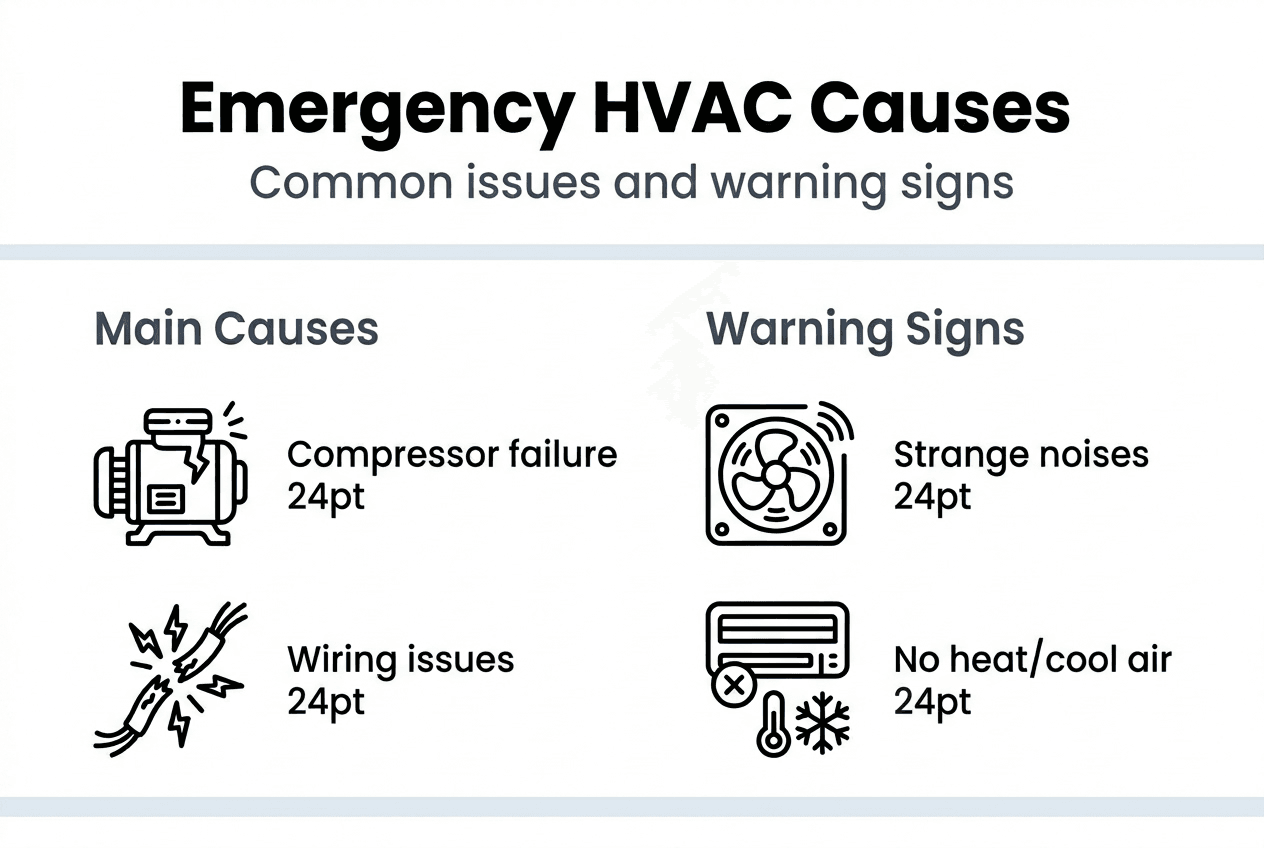
Compressor failures often announce themselves through loud grinding noises, frequent cycling, or complete system shutdown. Refrigerant leaks cause reduced cooling capacity, ice buildup on coils, and hissing sounds near the outdoor unit. Electrical issues manifest as tripped breakers, burning smells, or flickering system lights.
Furnace emergencies typically involve complete heat loss, persistent pilot light problems, or carbon monoxide detector alarms. Recognizing these symptoms allows you to act quickly and contact emergency repair services before minor issues escalate into major failures.
Key warning signs include:
- Complete loss of heating or cooling despite thermostat adjustments
- Unusual loud grinding, banging, or screeching noises from equipment
- Burning electrical smell or visible smoke from HVAC components
- System repeatedly shutting down or cycling on and off rapidly
- Water pooling around indoor or outdoor HVAC units
- Carbon monoxide detector activation near heating equipment
For detailed guidance on identifying and responding to these symptoms, explore our emergency HVAC troubleshooting guide designed specifically for Kansas City homeowners.
Why timing matters in emergency HVAC repair
Acting swiftly during an HVAC emergency protects your home, your budget, and your family’s health. Repairs completed within 24 hours reduce further damage by 40% compared to delayed interventions. This difference translates directly into hundreds or thousands of dollars saved on secondary repairs.
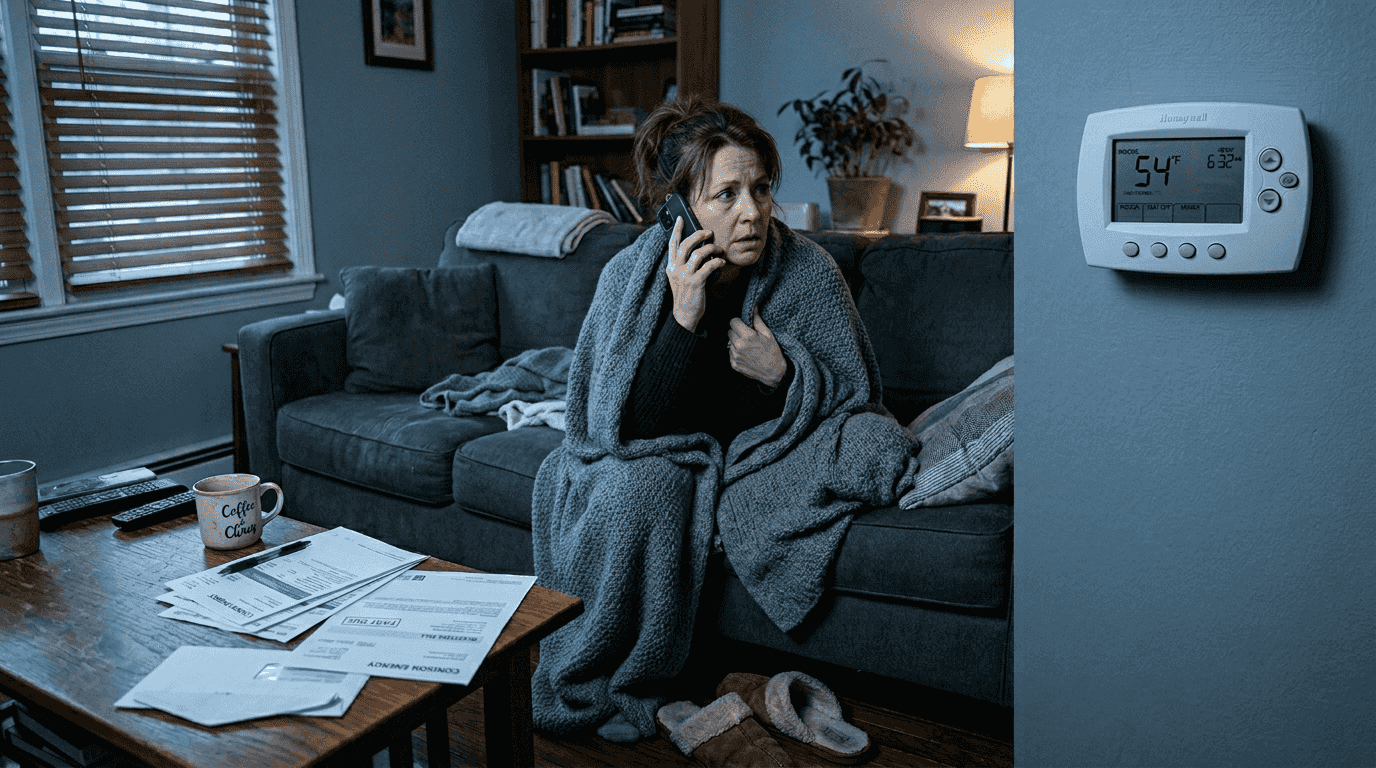
Delayed emergency response allows small problems to compound. A refrigerant leak left unaddressed damages the compressor. Electrical faults can cause fires or complete system burnout. Furnace failures during winter freeze pipes and create dangerous carbon monoxide risks.
Beyond financial impact, timing affects health. Poor indoor air quality from malfunctioning HVAC systems increases respiratory issues by 25% in vulnerable populations, including children, elderly family members, and those with asthma or allergies.
“Every hour an emergency HVAC failure goes unrepaired increases the risk of secondary damage, higher costs, and health complications for your family.”
Rapid professional intervention delivers multiple benefits:
- Prevents escalation from minor repairs to major system replacement
- Protects vulnerable family members from extreme temperatures
- Reduces total repair costs by addressing root causes immediately
- Minimizes downtime and restores home comfort faster
- Prevents structural damage from frozen pipes or excessive humidity
Understanding why emergency HVAC service matters helps Kansas City residents make informed decisions during stressful situations. Regular HVAC maintenance further reduces emergency risk by catching issues early.
Cost considerations for emergency HVAC repairs
Emergency HVAC repairs typically cost between $300 and $700, representing a 20-30% premium over regular service calls. This increase reflects after-hours labor, expedited parts procurement, and the complexity of diagnosing urgent failures under time pressure. Understanding these cost factors helps you budget appropriately and avoid surprise expenses.
Several variables influence final repair bills. Severity of damage drives costs most directly. A simple electrical reset costs far less than compressor replacement. Time of service matters because midnight repairs command higher labor rates than daytime fixes. Parts availability affects expenses when rare components require rush shipping.
| Repair Type | Typical Cost Range | Common Scenarios |
|---|---|---|
| Minor electrical fix | $150-$300 | Tripped breaker, loose wiring |
| Refrigerant recharge | $200-$500 | Small leaks, low refrigerant levels |
| Compressor replacement | $1,200-$2,500 | Complete compressor failure |
| Furnace ignition repair | $300-$600 | Pilot light issues, ignition failure |
| Emergency diagnostic | $100-$200 | Initial assessment and troubleshooting |
Cost management strategies:
- Ask for detailed estimates before authorizing repairs
- Verify whether parts and labor carry separate warranties
- Consider service contracts that include emergency coverage
- Request transparent pricing without hidden fees
- Compare emergency rates from multiple verified providers
Pro Tip: Many emergency repairs qualify for financing options. Ask about payment plans during your initial call to avoid financial stress during urgent situations.
Our emergency HVAC repair workflow streamlines diagnostics and reduces unnecessary costs through efficient processes.
How emergency repairs differ from routine HVAC maintenance
Emergency repairs and scheduled maintenance serve distinct purposes in home comfort systems. Recognizing these differences sets appropriate expectations and helps you plan effectively. Emergency service responds reactively to sudden failures requiring immediate attention, while maintenance works proactively to prevent problems before they occur.
Emergency repairs require 24/7 availability and rapid response times, often within 2-4 hours of your call. Technicians diagnose and fix critical failures under time pressure, focusing on restoring system function quickly. Costs run higher due to urgency, after-hours labor, and expedited parts sourcing.
Routine maintenance operates on scheduled intervals, typically twice yearly for optimal performance. Technicians inspect, clean, and tune systems during convenient daytime appointments. Costs remain lower because work happens during regular business hours without urgency premiums.
| Aspect | Emergency Repair | Routine Maintenance |
|---|---|---|
| Timing | Immediate, 24/7 | Scheduled, predictable |
| Purpose | Fix sudden failures | Prevent future problems |
| Cost | 20-30% higher | Standard rates |
| Urgency | Critical, same-day | Flexible scheduling |
| Focus | Restore function fast | Optimize performance |
Key operational differences:
- Emergency service addresses active failures; maintenance prevents them
- Emergency calls happen unpredictably; maintenance schedules in advance
- Emergency repairs cost more but deliver immediate relief
- Maintenance saves money long-term by avoiding emergencies
- Emergency technicians prioritize speed; maintenance emphasizes thoroughness
Pro Tip: Regular maintenance reduces emergency repair frequency by up to 70%. Investing in biannual tune-ups protects your budget and extends equipment lifespan significantly.
Learn how consistent HVAC maintenance improves home comfort and reduces unexpected failures.
How to choose a reliable emergency HVAC repair service
Selecting a trustworthy emergency HVAC provider protects your home and ensures quality repairs when you need them most. Start by verifying true 24/7 emergency availability. Many companies claim round-the-clock service but lack the staffing or infrastructure to deliver rapid response during nights, weekends, and holidays.
Local Kansas City expertise matters significantly. Technicians familiar with regional climate challenges, common system types, and local building codes diagnose problems faster and stock appropriate parts. This local knowledge translates directly into quicker repairs and better outcomes.
Customer feedback reveals reliability patterns that marketing materials obscure. Focus specifically on emergency service reviews, noting response times, technician professionalism, and repair durability. Look for patterns across multiple platforms rather than isolated testimonials.
Vetting criteria for emergency HVAC services:
- Verified 24/7 dispatch with guaranteed response times under 4 hours
- Licensed, bonded, and insured technicians with emergency training
- Transparent pricing with written estimates before work begins
- Positive emergency service reviews from Kansas City homeowners
- Well-stocked service vehicles to minimize parts delays
- Clear warranty coverage on emergency repairs and replacement parts
Service contracts offering emergency coverage provide valuable protection. These agreements typically include priority scheduling, discounted emergency rates, and annual maintenance visits. Evaluate contract terms carefully, comparing emergency call coverage limits and exclusions.
Pro Tip: Establish a relationship with a trusted HVAC provider before emergencies strike. Pre-screening services during calm periods ensures you have reliable support when urgent situations arise.
Discover why emergency HVAC service matters and how our emergency repair workflow delivers faster fixes. Kansas City homeowners facing furnace emergencies benefit from specialized local expertise. Regular service also explains how HVAC maintenance cuts bills.
What homeowners should do during an HVAC emergency
When your HVAC system fails unexpectedly, taking immediate action minimizes damage and prepares for professional repair. Follow these steps to protect your home and family while waiting for emergency service.
-
Turn off the HVAC system safely at the thermostat and circuit breaker. This prevents electrical hazards, reduces strain on damaged components, and stops minor issues from escalating into major failures. Locate your electrical panel and switch off the dedicated HVAC circuit breaker.
-
Check circuit breakers and fuses for obvious electrical issues. Sometimes a simple tripped breaker causes what appears to be a system failure. Reset any tripped breakers once and observe whether the system restores. If breakers trip again immediately, leave them off and contact professionals.
-
Document visible symptoms with photos or videos before technicians arrive. Capture any water leaks, ice buildup, unusual sounds, or error codes displayed on your thermostat. This documentation helps technicians diagnose problems faster and provides records for warranty claims.
-
Clear access to indoor and outdoor HVAC units by removing furniture, storage items, or landscaping obstacles. Technicians need immediate access to equipment to work efficiently during emergencies.
-
Contact a trusted emergency HVAC repair service immediately. Provide detailed symptom descriptions, system age and model information, and your availability for same-day service. Ask about expected response times and emergency service rates.
-
Implement temporary comfort measures while waiting for repairs. During winter heat loss, gather family in one room, use safe space heaters, and dress warmly. During summer cooling failure, open windows if outdoor temperatures permit, use fans for air circulation, and stay hydrated.
-
Avoid DIY repairs on complex components like compressors, electrical systems, or refrigerant lines. These attempts often void warranties, create safety hazards, and worsen damage.
Our emergency HVAC troubleshooting guide provides additional symptom-specific steps. Understanding proper HVAC installation also helps you communicate effectively with technicians during emergencies.
Expert emergency HVAC repair services in Kansas City
When HVAC emergencies strike your Kansas City home, rapid professional response makes all the difference. KC Air Control delivers 24/7 emergency repair services backed by over 70 years of local expertise. Our proven emergency repair workflow achieves up to 35% faster fixes through streamlined diagnostics and well-stocked service vehicles.

Our emergency technicians arrive prepared to diagnose and repair most common failures during the first visit. We maintain transparent pricing with written estimates before work begins, ensuring no surprise charges during stressful situations. Licensed, bonded, and insured professionals bring the specialized tools and parts Kansas City homes require.
Whether you’re facing furnace failure, air conditioning breakdown, or critical air quality issues, our team responds quickly to restore your comfort. Access our emergency troubleshooting resources or book online to secure your emergency repair appointment immediately.
Frequently asked questions
What is considered an HVAC emergency?
An HVAC emergency involves complete loss of heating during freezing weather, total air conditioning failure during extreme heat, or major indoor air quality issues requiring service within 24 hours. These situations threaten safety, comfort, or property. Not all urgent-feeling issues qualify as true emergencies. Minor temperature fluctuations, small airflow reductions, or cosmetic damage can typically wait for regular business hours without increasing risk.
How quickly should emergency HVAC repairs be made?
Emergency HVAC repairs should be completed within 24 hours of system failure to prevent damage escalation and maintain home safety. Faster response times improve outcomes significantly, reducing secondary damage by up to 40%. Many professional services target 2-4 hour response times for critical emergencies.
What does emergency HVAC repair typically cost?
Emergency HVAC repairs typically range from $300 to $700, depending on failure severity and required parts. These costs run 20-30% higher than regular repairs due to after-hours labor, expedited service, and urgent parts procurement. Complex repairs like compressor replacement cost significantly more.
Can I perform emergency HVAC repairs myself?
Homeowners should avoid DIY emergency HVAC repairs due to serious electrical, mechanical, and refrigerant-handling risks. Basic troubleshooting like checking breakers or changing filters is safe, but complex diagnostics and repairs require professional expertise. Attempting repairs yourself often voids warranties and worsens damage. Contact licensed emergency HVAC professionals for safe, effective solutions.
Recommended
- Emergency HVAC Repair Workflow KC: 35% Faster Fixes – Air Control
- Why emergency HVAC service matters for Kansas City homes – KC Air Control – Heating & Cooling
- Emergency furnace repair guide for Kansas City homeowners – KC Air Control – Heating & Cooling
- Top 4 hvacservicesmo.com Alternatives in 2026 for Affordable HVAC Solutions in Kansas City, MO – Air Control
Alright! time to see if f1688 lives up to the hype! Depositing a small amount to test the waters. Wish me luck everyone. f1688